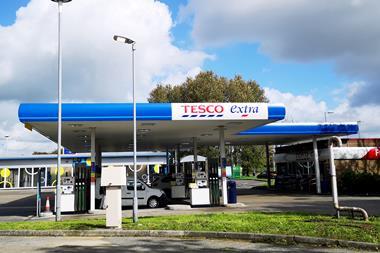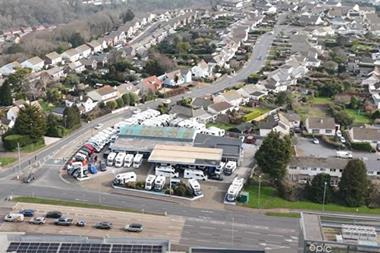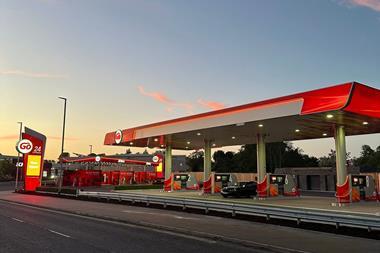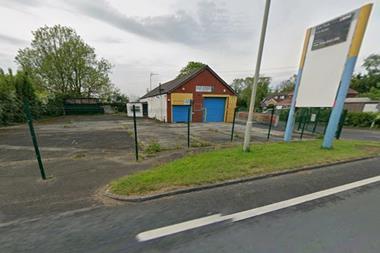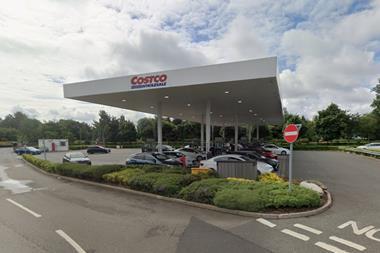




















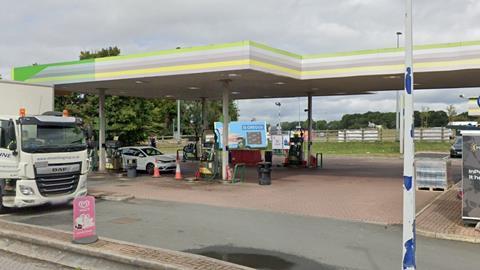
An historic fuel leak at a Telford service station should not prevent EG On The Move from knocking down and rebuilding the site – if it takes preventative measures.
The Top 50 Indie acquired Shawbirch Service Station in Admaston near Telford from Applegreen with a view to redeveloping it.
The company is seeking planning permission from Telford and Wrekin Council to demolish the existing fuel pumps, canopy, shop and Greggs unit and install new fuel pumps, canopy, shop with food to go, a substation, EV charging spaces, customer parking spaces including disabled parking spaces, landscaping and associated works
However, a geo-environmental assessment, carried out for EG On The Move by EPS, found evidence of a “weak hydrocarbon odour and elevated concentrations of petroleum hydrocarbons” in soil and groundwater samples, particularly around the HGV fuel pump area.
The report says: “The primary concern for the site relates to the potential for hydrocarbon contamination to be present on site from the use of the site as a PFS, and the associated contamination linkages. The site is understood to have been a PFS since the early 1990s, with no other significant historic land uses of the site before this. The petroleum officer information does not indicate that there have been any known leaks or issues at the site but that the tanks present are from the original installation (>30years) and that no leak detection is installed.”
EPS says that due to the risk posed by ground gases onsite, it is recommended that a suitable gas resistant membrane is installed within the floor slab of all structures planned in the redevelopment, with all joints and penetrations suitably sealed. Additionally, it says it may be necessary to incorporate underfloor venting or pressurisation in combination with the membrane, which should be confirmed following the further monitoring.
However, further monitoring may not provide the necessary additional data.
As per the planning application, the removal of existing fuel storage and distribution infrastructure will reduce the long-term liability of the site.
The petroleum records for the petrol station state that there are currently five single-skin tanks present on the site. Two install dates are given on different reports – 1989 and 1990 – which is around the time the forecourt first opened. The pipework was also installed in 1989 and is of galvanised mild steel construction. On site drawings show that the tanks are located to the west of the canopy and pumps, with the offset fill located to the west of this and the interceptor to the north; this matches with the current layout of the site. None of the records provided suggest that the tanks have been replaced and that any historic tanks are present on site. Testing is reported to have been carried out on the tanks in January 2000 and 2002, and on the lines in 1999 and 2002. Various site inspection records are held for inspections between 1999 and 2012 but it is noted that leak detection for the tanks has not been installed as these are marked N/A on the forms.
Following uplift of the underground tanks and fuel lines, EPS says any visually grossly impacted shallow soil (displaying dark staining and hydrocarbon odour) present within the sides and base of the excavation and shallow groundwater should be removed.
The company adds that drinking water supply pipes may be at risk from contaminants in the ground, specifically petroleum hydrocarbons. It is therefore recommended that the local water authority is consulted to agree on the most appropriate barrier for drinking pipework.
If soil sampling and groundwater testing indicates that unacceptable contamination remains after the tanks have been removed and replaced, there is a possibility that additional in situ remedial treatment will be needed alongside the construction of the new forecourt.