













Every few months or so, there is a story in the regional press about disgruntled drivers who claim to have damaged their vehicles by putting the wrong fuel in their tanks.
These cases are not where the driver has picked the wrong nozzle and pumped the wrong fuel but rather where the wrong fuel has been put in the wrong tank ie diesel in petrol and vice versa. In the industry, this is known as a ‘crossover’ and, according to the PRA, it should never happen.
PRA technical director Phil Monger says if hauliers, tanker drivers and forecourt operators follow the ACOP (Approved Code of Practice – part of the Dangerous Substances and Explosive Atmospheres Regulations 2002) delivery form in L133 to the letter, they will not mis-fuel. And if it does happen, it’s clear who is at fault.
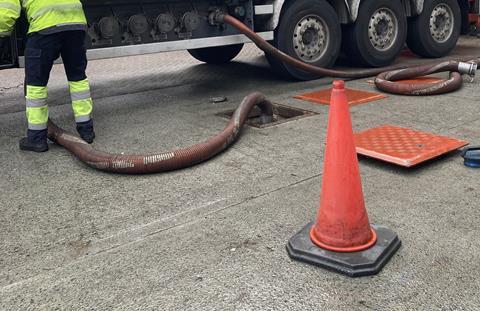
“In an assisted delivery the requirement is for the site operator to prepare a form showing the tank to be filled, the ullage available and the grade of fuel in the tank. When the tanker arrives, the site operator and the driver are required to view the tank gauge and agree the ullage.
“If the delivery form is made out correctly and a mis-fuel is made, the driver is at fault. If the form is made out incorrectly and a mis-fuel is made, the site operator is at fault. If the delivery note provided by the tanker operator or haulier contains wrong information, the haulier is at fault.
“In an unassisted delivery, the same checks must be made but the site operator should check the ullage, fill in the form and leave it for the tanker driver, who picks it up and checks that the ullage is correct. Again, if the form is made out correctly it is the driver who is at fault but if it’s been incorrectly made out it is the site operator at fault.”
Monger is a long standing member of the PELG (the Petroleum and Enforcement Liaison Group) and says the matter of fuel delivery procedures and safety implications has led to many enquiries following concerns raised by fuel tanker drivers.
ACOP L133 came into being in May 2003, for the unloading of road tankers and L138 for compliance with DSEAR.
“These changes brought petroleum legislation in line with the general principle of the Health and Safety at Work Act – that the person who creates the risk must control it,” explains Monger.
L133 has three duty holders listed, all of whom depend on the other – the retailer, the tanker operator and the tanker driver. “The primary duty holder is the retailer as it is their undertakings being carried out. To help comply, the PRA produced a delivery form based on the model form in L133 for retailers to use, but it soon became clear that the fuel suppliers were not following the ACOP and produced their own form thereby overturning the procedures in L133,” says Monger.
The PELG adapted the PRA form to make it a standard form for the industry to use, but Monger says few suppliers accepted it.
“The former Carriage of Dangerous Goods by Road regulations required, and L133 require the ullage check to be carried out by two persons, and in unassisted deliveries, the site operator should fill in the form with ullages written in for the tanker driver to check on arrival. Now retailers are being told they are not wanted to be involved as drivers use the in-cab technology to check ullages. Unfortunately, various examples have been shown where major discrepancies in accurate recording of ullages have led to overfills. Regardless of the practices being carried out by some suppliers, retailers have duties under DSEAR and the best way to ensure compliance is to follow L133.”
There are systems available to help prevent crossover. Midas is one and is described as an “innovative fuel sensor valve” that can detect incorrect fuel types or water dilution. MFG uses the mobile Midas system and engaged Berrys Technologies to add RFID tags to each filling position across its network. The RFID tags, coded with the fuel type, tank number and location code, calibrate the mobile Midas when connected for fuel deliveries.