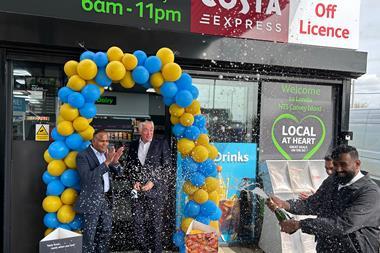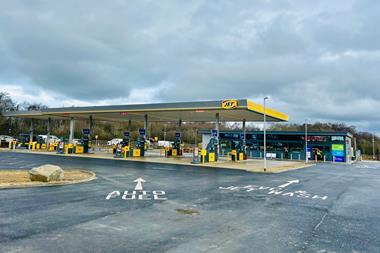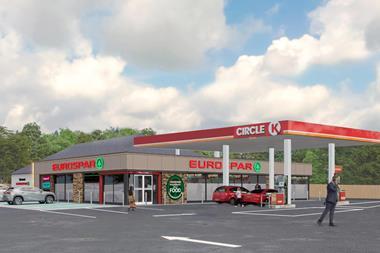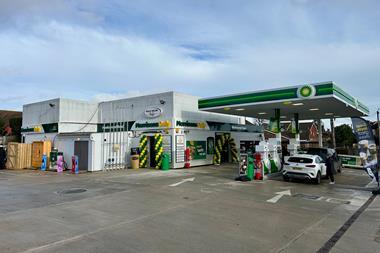






Food to go is such an important component of a forecourt store that it now impacts store design in a big way.
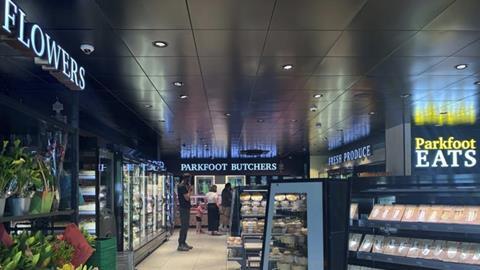
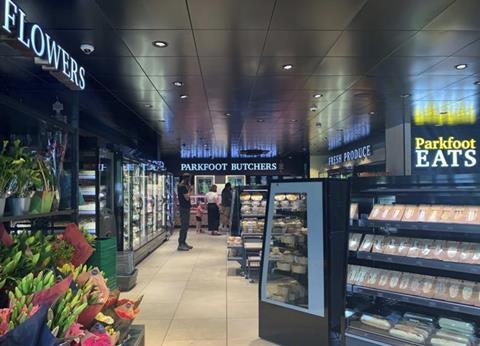
For example, food to go – both to eat now and to take home to eat later – is the first thing shoppers see when they enter Forecourt Trader of the Year winner Parkfoot Garage in West Malling, Kent.
Owner David Charman says: “When you enter you see our glorious flower display then it’s our fridges full of sandwiches, snacks and products from our butchery that shoppers can take home and eat in the evening. Food to go is such an exciting part of the store that we had to make it as visible as possible.”
And that visibility has paid off with sales up much more than even Charman had anticipated.
Charman is not alone in his thinking. Ian Cawley, head of operations at Top 50 Indie Park Garage Group, says one of the most significant developments in store design has been the growing emphasis on food-to-go and food-for-later missions.
“These are now key growth drivers for the forecourt channel, and we are investing heavily in both areas. As a business, we are actively trialling a range of new store layouts to understand how to best showcase these offers, improve customer flow and maximise conversion. The shift towards more food-led propositions such as our Bakery 79 has fundamentally reshaped how space is allocated and how customers navigate our stores.”
Matt Cundrick, founder of global boutique food-to-go consultancy team FTG Navigator, says customers make buying decisions visually, so if your food to go isn’t visible the moment someone enters your store, you’ve already lost a sale.
“The most impressive designs I’ve seen recently are the ones that take queue planning seriously. Not just ‘where the queue goes’ but how the queue sells. Using queue space for grab-and-go, bakery, snacks or impulse refrigeration is a massive, missed opportunity in many sites, too often it’s dead space. Likewise, operators underestimate the power of clear sight lines.”
Back-of-house flow is still one of the most commonly overlooked design elements, says Cundrick. “I regularly see counters where the gap between the front and back line is either too narrow for efficiency or far too generous, wasting valuable shop floor. Getting this wrong increases labour costs and slows down service. The best recent designs also integrate rear-fill fridges and shared stock rooms so replenishment becomes invisible, no trolleys in the aisle and no staff trapped doing inefficient micro-moves. Park Garage Group has done this superbly for Bakery 79 in their new Yeoman site.”
Says Cawley: “Food to go has become a critical component of the overall fuel and forecourt proposition. To accommodate its growth, retailers are re-evaluating space allocation, reducing under-performing categories, and redesigning layouts to prioritise high-margin, high-frequency missions. Ultimately, driving more footfall onto the forecourt – and satisfying as many shopper missions as possible – creates significant commercial benefits. The more reasons customers have to visit, the stronger the overall performance.”
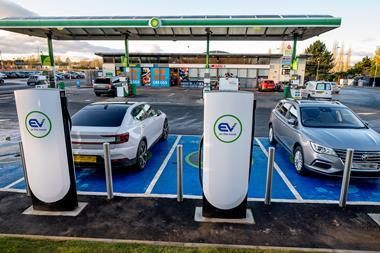
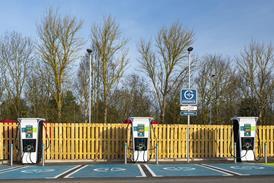
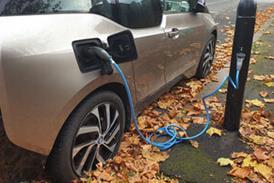
David Hope, retail design consultant at The Jordon Group, says that with EV ownership on the rise, dwell time for drivers who are charging their vehicles means seating areas and wifi are a ‘must’ now rather than a ‘nice to have’.
Cundrick agrees: “Seating and dwell spaces are making a comeback, but they need to be purposeful. Charging points at tables are now a baseline expectation, not a premium feature. Customers value somewhere clean, bright and well-branded to pause for a coffee or to wait during EV charging, and forecourts that lean into this are seeing incremental basket growth.”
Making more space
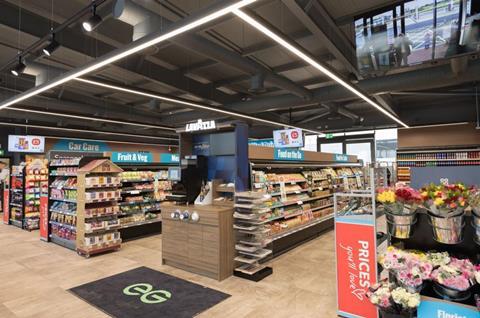
There is still a big demand for open ceilings, says Paul Jordon, managing director of The Jordon Group, as they make the space feel bigger.
“Open ceilings give the illusion of a bigger store but they also mean you can go higher with your merchandising. And signage can be seen across the store. I think it feels a little bit more premium as well.”
Cundrick adds: “Branding and signage are still huge. High-level sight lines, strong fascia hierarchy and unmissable food propositions help customers understand the offer instantly. If customers have to ‘work it out’, they don’t buy. Cohesive design builds trust.”
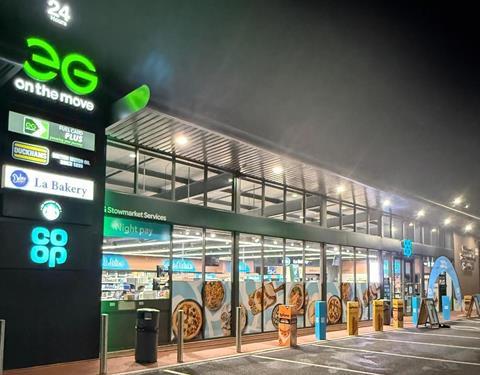
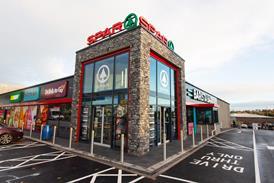
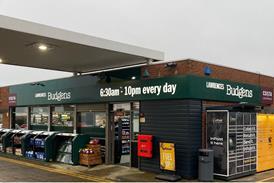
When it comes to store exteriors, kerbside appeal is important and everyone wants a “nice glass front”, says Jordan. “They look good and give plenty of vision into the store,” he explains, adding that anything other than glass or brick in the store front is too high maintenance.
While many retailers are opting for open ceilings or glass fronts, Ian Taylor, Spar UK retail and brand development director, says there is no one-size-fits-all model in forecourts any more. “For some sites, food for now missions are the priority; for others, it’s about elevating the in-store experience by offering butchery counters, deli concepts or premium wine. The key is understanding your customer and building the right format for your catchment area.”
Jordon agrees and says what you do in-store depends on whether yours is a transient or a community site. “With a transient site it is all about food to go whereas with a community site, it’s more about fresh produce and meal components.”
Security measures
You can’t talk about store design without mentioning security and Vars Technology director, John Garnett, says many of the company’s existing customers have security front of mind when approaching both refits and new-to-industry sites.
“Designing security measures into plans from the ground up, including site layout and technology solutions, ensures effective coverage and is the best way to avoid problem areas that are out of sight of staff and cameras further down the line. It is also typically the most cost-effective way of approaching good retail security, avoiding expensive refits and maximising the benefit from any technology solutions they invest in.”
He continues: “Staff having good visibility across the shop floor, particularly covering desirable items for thieves such as alcohol, meat and confectionery, can play a huge role in minimising theft. While some shoplifters are increasingly bold, the priority for most is not to be noticed. Staff making eye contact or addressing them as they enter the shop can be a huge deterrent.”
Overall, forecourt stores in 2026 will look more tailored, more efficient and more service-led, says Spar’s Taylor. “Retailers who know their customer, invest wisely and stay flexible will be best placed to thrive.”
Cundrick concludes: “The future of store design in forecourts is simple: make it easy for customers to see, choose and buy, while making it effortless for teams to deliver consistently. When you get those fundamentals right, everything else becomes a multiplier.”