







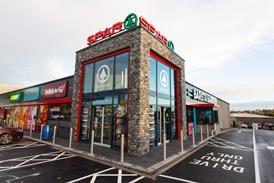







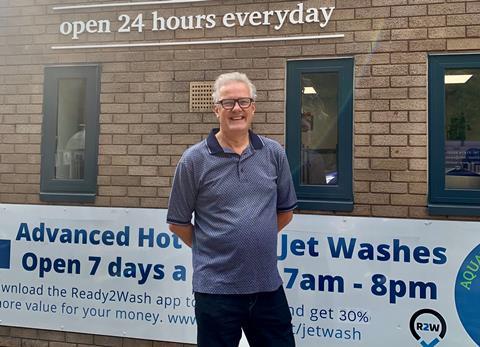
Former Forecourt Trader of the Year David Charman is on track to save thousands of pounds a year by using heat expelled from his grocery store’s banks of refrigeration to warm water for his jet washes.
Commercial and industrial refrigeration systems reject significant quantities of heat as part of their normal operation. This heat is normally discharged into the surrounding air through air-cooled condensers.
By installing a heat reclaim system, a proportion of this otherwise wasted thermal energy is being captured at Charman’s site and used to pre-heat hot water. This reduces the energy required from its electric boiler.
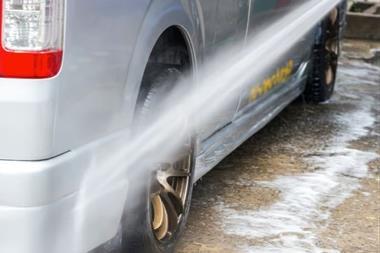
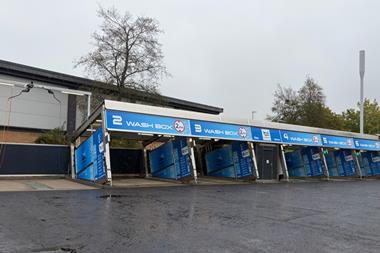
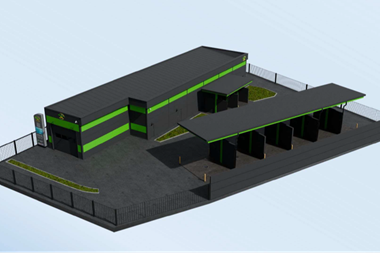
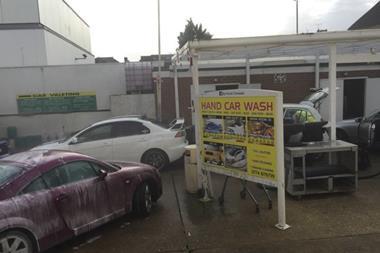
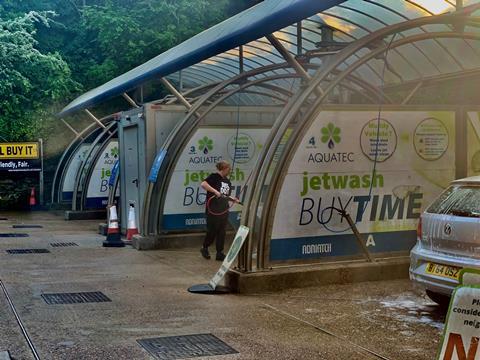
The BP dealer says at current rates his petrol station in West Malling, Kent will cut an annual £4,000 from the £6,000 cost of heating the water for his six jet washes.
And he says for a modest investment – he paid less than £1,000 for installing a heat exchange plate and associated works – other operators should think about following suit.
Charman himself is considering extending the practice to provide hot water for other parts of his 3,000sq ft Parkfoot Spar 24-hour store.
He first wanted to see how fitting a heat exchanger onto his remote refrigeration’s outside plant would work. “We thought we might get three or four degrees out of it, with our refrigeration being so energy efficient,” he says. “But we are typically seeing 18 to 20 degrees of heat achieved.”
Charman extracts water from a borehole, 40m down, via the car wash filtration system, which is around 10 degrees. This water then goes into a holding tank where it increases to a temperature of around 20 degrees. From there it is softened and heads to the heat exchanger, with its temperature reaching around 40 degrees before going to the boiler to top up on heat.
This means that less work is needed from the boiler to bring the water up to the 50 degrees required for jet washes. It is a process, he says, that can give substantial savings to other operators like him who have a substantial amount of refrigeration in-store and a need for plenty hot water.
“Heat exchangers have been around forever, but as an industry I don’t believe we have used them as much as we should really,” says Charman.
“It’s not something I’ve come across in the past 20 to 25 years. But now many of the bigger sites use an awful lot of hot water, even without car washing.
“As a business, [with an onsite kitchen, butchers counter and deli] we are doing an awful lot of washing up. We have three commercial dishwashers to start with. We’ve all moved on from just having a hot tap in the staff toilet.”
So how does the system work? Rob Bridgwood, managing director or TQ Refrigeration, who fitted Charman’s device, explains:
“A refrigeration system removes heat from a refrigerated space or process and transfers that heat to the refrigerant. The compressor then raises the refrigerant pressure and temperature before the refrigerant passes to the condenser, where heat is normally rejected to the atmosphere,” he says.
“A heat reclaim heat exchanger can be installed in the compressor discharge circuit to transfer some of this heat into a water circuit.
“The recovered energy is then used to pre-heat incoming cold water before it enters the existing hot water storage cylinder or final heating system.”
The success of using this technology will be site dependent, Bridgwood stresses.
“When appropriately designed and controlled, the system can reduce conventional water heating energy consumption, lower operating costs, and contribute to carbon reduction objectives,” he says.
“The strongest business case is generally found at sites with high refrigeration operating hours and a consistent demand for hot water.”
But he adds: “A detailed engineering and financial assessment should be completed to determine the recoverable heat capacity, expected annual savings, installation requirements, and return on investment.”