











The CMA’s first Road Fuel Monitoring annual report published today (December 22) states that higher operating costs for petrol stations are not a “driver of increases in average fuel margins for large retailers”.
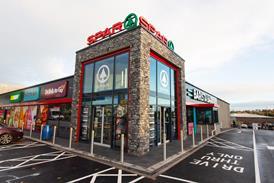
The CMA conducted research into the big supermarkets and, as a result, states: “If operating cost increases are being absorbed or reflected in retail pricing, we would expect to see this reflected in declining or flat operating profit margins. In summary, we find a trend of increasing average operating margins and so do not see operating cost increases impacting the profitability of retailers’ road fuel businesses or fully explaining the historically high and in some cases, further increasing fuel margins. This indicates that competition has not strengthened since our market study.”
Commenting on the CMA report’s conclusion, Gordon Balmer, executive director of the PRA, says: “Operating costs alone do not account for higher fuel margins, yet retailers continue to face steep rises in labour, taxation, energy and crime – pressures that make it increasingly tough to operate. Comparisons with historic margins overlook these significant cost increases. Pump prices are considerably lower than the peaks observed in 2022 and 2023, corresponding with falls in wholesale fuel prices, indicating strong competition between retailers.”
On a ppl basis, the CMA reports that fuel margins for supermarket and non-supermarket retailers are historically high. However, it adds that whereas supermarket ppl margins have trended downwards from a high of 10.9ppl in 2022 to 9.6ppl for 2025 year to date (covering the period January to September 2025), non-supermarket retailer margins are broadly increasing. Non-supermarket retailer fuel margins were 11.1ppl for 2025 year to date, compared to an average margin of 10.8ppl in 2024. Average fuel margins on a percentage basis have continued to increase for both supermarket and non-supermarket retailers.
Dan Turnbull, senior director of markets at the CMA, says: “Fuel margins remain at persistently high levels – and our new analysis shows operating costs do not explain this. This indicates competition in the sector is weak – if it was working well, drivers could see lower prices at the pump.”
RAC head of policy, Simon Williams, was quick to side with the CMA: “The fuel retailers trade association has claimed that rising operating costs were the reason for average margins on petrol and diesel being higher, but this has now been clearly rejected by the CMA which says these don’t explain why fuel margins remain high compared to historic levels.”
The CMA’s comments regarding operating costs relate to the supermarkets. Forecourt Trader understands that when it came to oil company sites and independent forecourts, their operations were so varied that the CMA took a one-size-fits-all approach to measuring profitability, coming to a conclusion that does not therefore reflect the true situation.
As a result of its conclusion, the CMA will not assess operating costs again in the next five years, “unless there is evidence of a new cost trend emerging which clearly impacts fuel margins”.
Balmer continues: “We are disappointed that the CMA has stated it will not include operating costs in its analysis over the next five years. A more balanced and consistent approach is needed to reflect the real challenges facing the sector.
“We will continue to work constructively with the CMA to bring greater clarity and balance to future reports and will engage with government on the forthcoming Fuel Finder scheme, due to be implemented early in the new year.”
The CMA says its new Fuel Finder scheme will allow drivers to compare real-time fuel prices, through navigation apps and price comparison websites. This, it says, will allow drivers to find the best deals and spur competition as fuel retailers compete for customers.