Removing all external bins from a service station, and inviting customers to put all of their waste together on trolleys in a foodhall for staff to separate later, increases recycling rates.
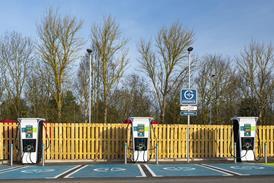
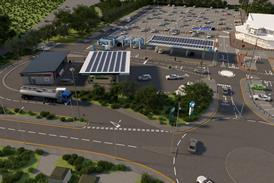
That is what Extra MSA has found in a trial at its motorway service area in Beaconsfield, Buckinghamshire, one of 10 it operates in the UK.
It says that recycling rates increased from 18% to 36% when it replaced bins in the site’s foodhall with ‘Litter, we’ll sort it for you’ trolleys. And when it removed bins from the outside service station area, recycling rates improved again to 49%.
Extra MSA has been working with circular economy specialist Reconomy Connect to get around the problem of waste cross-contamination.
From March 2025, Simpler Recycling regulations have required businesses in England with more than 10 full-time equivalent employees across their entire business to separate their waste collected in customer facing bins into typically four streams: Dry recycling (glass, metal and plastic), paper and card, food waste and black bin waste to be sent to landfill.
The Extra MSA pilot led to customers taking their waste home, or returning it to its food courts, while litter levels did not increase, says the company. Also, an absence of food waste in external areas led to a reduction in vermin. And staff previously servicing car park bins were redeployed to other customer-facing activities, while the business could cut back on bin bag purchases.

Over time, Extra MSA plans to remove bins at its other sites. Ross Mendenhall, group operations director at Extra MSA Group, says: “For our customers the changes have made recycling simple and effortless. There’s no longer confusion over which bin to use or what can and can’t be recycled. For our employees, this transformative strategy has fostered a sense of ownership and pride in our sustainability efforts, as they play a direct role in helping us to transition to a truly circular economy.”
David Gudgeon, head of external affairs at Reconomy Connect, says that the model can be applied across other sites and sectors. “It shows that with the right data and process, we can make recycling simple, effective, and measurable across the retail and hospitality sector,” he says.
“One of the biggest challenges in public-facing spaces is contamination – even with the best intentions, customers can struggle to separate their waste correctly, which means valuable materials are lost. Working with Extra, we were able to redesign the system so that operational teams take responsibility for sorting, supported by clear signage and dedicated facilities,” he adds.