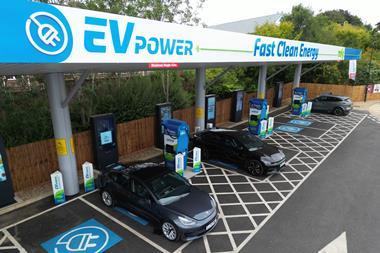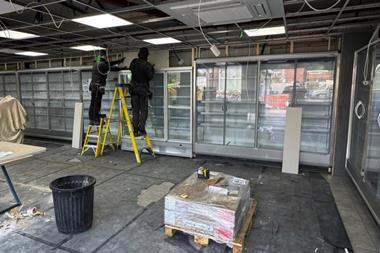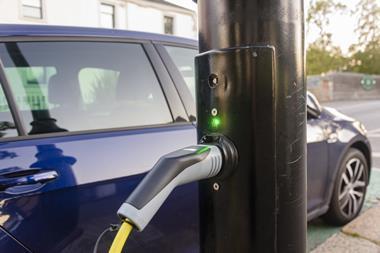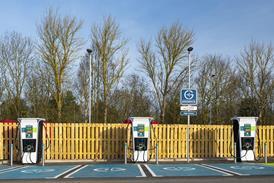
















Largely unregulated and fraught with operational dangers is how industry experts have portrayed the emerging forecourt electric vehicle charging sector.
Speaking at APEA Live earlier this month, members of a panel described a market, still in its infancy, in which operators are unsure of best practice when it comes to installing the technology, and where potential safety issues are still being overlooked.
“EV feels incredibly unregulated,” said Penny Petroleum’s head of compliance and business development, Emma Shell, at the event in Milton Keynes. “It feels like you stick your finger in the air and just hope for the best, and that’s not a safe or comfortable position for any operator to be in.”
Graeme Warnell, who provides fire risk site assessments through his EV-Exbox business, said that the position of petrol pumps is frequently identified as the sole risk when chargepoints are installed. Often, installers, he said, ignore where fuel tank manholes are sited, or hazards outside the site’s perimeter.
“We say that you have a duty of care on a boundary risk assessment to see what’s on the other side of the fence. It’s amazing how many people don’t look over the fence, and I’ve seen a metal palisade fence, and an above ground diesel tank half a metre away on the other side of that fence,” said Warnell.
“Because it’s not on the footprint of the forecourt, it’s just assumed that it’s not our risk, where on a very rare occasion, something does go wrong.”
Penny Petroleum’s Shell said that despite being an early adopter of the technology – the Top 50 Indie introduced charging 10 years ago – the business still had questions about how to approach the technology.
She added: “EV was rolled out so quickly, and people have tried to embrace it and adapt it”, but now the industry will “potentially have to look at our installs more seriously, and consider how we need to make changes within, whether that’s hazardous plans, or what infrastructure we put next to it.”
Shell continued: “And then ultimately, who’s actually going to govern EV? Is it going to be the petroleum officer, or is it going be a different authority? Who’s going to make those decisions about where EV safety fits and how we can apply those rules?”
A big problem, according to Warnell, is the lack of experience in the supply chain. “If we’re putting in new pumps or a new car washer, within the industry there is a lot of experience with people that have been doing that for a lot of years,” he said.
“EV charging, although it has been around for over a decade, tends to be new. Often we’re engaging with a supply chain that’s not familiar with the hazards of risk of a forecourt, as some of the other people may be. So primarily, they’ve gone in with a brilliant electrical mindset of how to install it, and wire it up, but they’ve been incredibly unaware of some of the less obvious risks.”
He adds: “On every single EV charging project I’ve come across where we have seen a high-risk situation and I ask: ‘Why did you put it there?’, that answer is always: ‘It was the shortest cable run.’ Well, the shortest cable run is not always the best answer to putting in EV charging infrastructure.”
While not legally required to get petroleum officers involved in installing EV chargers at a petrol filling station, consulting them beforehand is strongly recommended to know immediately where any potential hazards such as discarded fuel tanks are, said a member of the audience working in this field.
He said: Unfortunately, you don’t bring us in early enough. We should be there at the very first meeting because we have the plans of the station even if it was built 25 years ago and it has changed hands five times.”
Alan Anderson, HSE manager Broham Forecourt Developments admitted that this is something that the industry needs to get on board with. “I think as an industry we are not very good at getting the petroleum officer involved,” he conceded.
Accountability for a safe installation is ultimately with the operator, although they often believe they will be protected by suppliers having carried out risk assessments on their behalf, said Warnell.
“We see some great installations out there, but we see a lot of installations where there’s been an assumption that someone else manages the risk process. So, the operator imagines that the EV charging installation company does a risk assessment and vice versa. What happens is that risk assessment just doesn’t get done. And it falls through the gaps,” he added.
Cirkle K Ireland’s director for fuel, Jonathan Diver, agreed: “The operator always has ultimate responsibility, so it’s really important that all the parties are communicating. Keep a strong framework for that, whether that’s regular touchpoints, make sure everybody’s properly informed.”