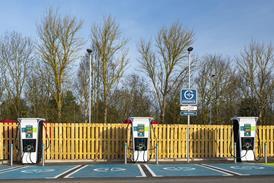
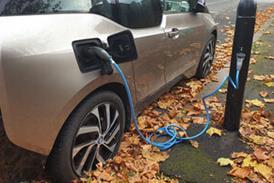
Research by renewable energy specialists, RenEnergy, reveals that the UK’s service station network is sitting on an untapped renewable energy goldmine worth over £19m annually, which could transform EV charging affordability for millions of road users.
The study found that 46,153 car parking spaces across 151 UK service stations on the UK motorway network and A-roads are suitable for solar car port installations. These car ports could produce around 124 GWh of energy per year, equivalent to powering 1.9 million EV trips from London to Manchester.
At current energy rates, RenEnergy says this represents potential savings worth £19.3m per year for service station operators – savings that could be passed directly onto EV drivers through reduced charging costs
Solar car ports sit above parking spaces and generate energy from solar panels on the canopy, which can be used for EV charging at every space while providing shelter and shade for vehicles. The rollout of this technology could represent a significant leap forward in improving EV charging infrastructure at service stations nationwide, says the report.
Beyond cost savings, solar car ports offer service station operators energy security in often remote locations, reduced reliance on the grid and offer substantial carbon savings.
Damian Baker, founder and managing director of RenEnergy, says: “The answer to a significant EV charging conundrum is sitting right in front of us in car parks across the country. We know many people are concerned about being able to access chargers on long journeys, and service station operators need more electricity supply to provide more charging spots. Solar car ports can provide renewable energy supply along with a number of other benefits to road users, like protection from the elements and EV charging for every space.
“Our research shows that there could be a significant amount of energy harnessed from service station car parks that could go towards creating the EV infrastructure we need. With energy savings of over £11m on the table annually, there are clear incentives for providers to pass on cost savings to road users for cheaper EV charging.
“Leveraging solar for car parks can not only provide benefits to road users but can also deliver on cost savings and energy security for the businesses they are attached to. As the cost of rolling out renewables is a key concern for many businesses, working with an organisation like RenEnergy can provide flexible models to implement it on site to make it commercially viable.
“If we add to this opportunity the car parks across the UK at offices, hospitals, supermarkets, retail parks, airports, train stations and other places we live, work and play, we could see a massive increase in secure energy and lower costs for businesses and the public. To help harness this technology, we need to see the government incentivise and mandate the technology like countries such as France have already done.”
The research comes as solar energy rollout and development of the electricity grid to accommodate more demand from the electrification of homes, businesses and vehicles forms a central part of the Government’s Clean Power 2030 strategy. This includes a government consultation around solar car ports and their viability, which has now closed. Results are yet to be published.
Baker said: “The Clean Power 2030 strategy highlights the role of solar in improving our energy capacity, and the challenges posed by the great grid upgrade and EV charging. If we harness solar and battery energy storage, we can overcome these challenges and get the rollout underway. It doesn’t have to be difficult or expensive either. We have the technology at our disposal and are already seeing success across the UK, so let’s use it.”