
















I’ve been reading Hugo Griffiths’ recent articles here on the Forecourt Trader website about drive-offs with great interest, and agree with much of his analysis. For a start, it is patently absurd to expect the police to be able to somehow solve the problem; they have too many other critical issues to deal with as it is.
I have been hearing the comments from retailers that police aren’t interested for over 40 years – and in all of that time they have been true – to the extent that police forces have usually only showed any real interest in things like forecourt CCTV videos when a drive-off happened to have some connection with another crime that they were already investigating (some things never change).
Where I part ways with Griffiths is in what I see as the only feasible solution: his suggestion is further technology, but I beg to differ. In my opinion the only realistic way to effectively kill the issues of drive-offs and no-means-of-payment is to operate pay-at-pump. Unfortunately, to properly implement that solution, it requires more than just installing new pumps or actually using the payment terminals on existing pumps – many of which have had the facility for decades. It requires a rethink of the physical layout of fuel retailing sites, and perhaps a change of attitude by operators.
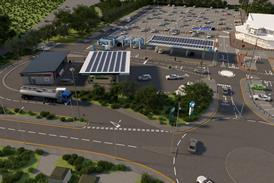
Many years, in fact several decades ago, I was told by a very senior retail manager at one of the large oil companies, which at the time owned and licensed out several hundred sites here in the UK, that they actually had architect’s drawings for a site layout which was radically different to anything that their then competitors were planning.
It had been drawn-up, at least in part, in response to their licensees’ complaints about an earlier epidemic of drive-offs – (some things never change). The core of their design was to physically separate the different profit centres on a forecourt – the pumps, shop, carwash, etc – and to create sufficient parking spaces for customers to be able to use any or all of those facilities without worrying about creating queues at the pumps. As a matter of course, the pumps all had payment terminals – as did the carwash.
When I asked the obvious question “Isn’t that going to destroy your shop sales?” – the answer surprised me. Without specifying what, if any, research they had carried out, they believed that there would be no negative effect on shop turnover. In fact, there was a suggestion that since the shop was now a convenience store and thus a destination in its own right, allowing customers who wanted to use the shop to do so without feeling the need to rush back out as quickly as possible to move their car off the pump, the change could actually result in increased shop sales. Clearly, they weren’t very impressed by the idea of impulse sales being a significant part of the then new convenience/grocery shop designs. The virtual elimination of non-payment for fuel was in any case expected to contribute to site profitability.
Some years later I asked the same person why their radical design hadn’t yet seen the light of day. The first and most obvious answer was cost: most of their estate was physically too small to implement the design in full, and the cost of acquiring additional land at existing sites, even if physically possible, was considered prohibitive; on top of which was the cost of moving tanks, pumps, or even shop locations. A series of complete knock-down rebuilds would require capital expenditure which the ‘higher-ups’ didn’t believe was justified in potential returns. The second answer was said more quietly – there were ‘traditionalists’ in influential places who simply wouldn’t consider pay-at-pump at any ‘normal’ forecourt, and apparently when the design had been shown to potential licensee operators, they too had all immediately complained about the presumed effect on shop sales.
I wonder whether anyone at Costco reckons that their stores are losing out on potential sales because their fuel is all dispensed by pay-at-pump? Personally, I doubt it.
This article was written by Jan Mikula, who represents nationwide franchise accounting company EKW Group – ekwgroup.co.uk