










A U-turn on the continent-wide mandate to ban sales of new petrol and diesel cars could be on the cards after European automotive bosses wrote to European Commission President Ursula von der Leyen to say the EV mandate is “no longer feasible”.
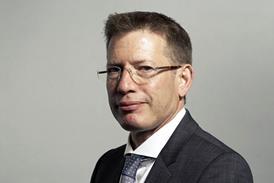
In an unprecedented move the chief executive of Mercedes, Ola Kallenius, and Matthias Zink, head of Schaeffler Powertrain and Chassis, which makes transmissions, engine components and hybrid systems for several auto firms, have warned von der Leyen of the lack of realism surrounding current transport policy.
Writing in their respective capacities as presidents of the European Automobile Manufacturers’ Association (ACEA – the European equivalent of the SMMT) and CLEPA (European Association of Automotive Suppliers), Kallenius and Zink say that while “EVs will lead the charge” as politicians seek to remove carbon-dioxide emissions from the world, “there must also be space for (plug-in) hybrids, range extenders, highly efficient internal-combustion engine vehicles, hydrogen and decarbonised [IE synthetic] fuels”. They also cautioned that “penalties and legal mandates alone will not drive the transition”.
With China processing around 90% of key battery components, the pair say that “Europe faces near-total dependency on Asia” for batteries. This, together with increasing manufacturing costs, sluggish consumer demand and poor charging infrastructure leave automotive firms tasked with transforming the market “with our hands tied behind our backs”.
The presidents also say that “CO2 regulation for heavy-duty trucks and buses must be reviewed as soon as possible”, with “robust business cases” required for this sector in order for electrification to work.
British automotive policy is set locally rather than being reliant on European Union rules, but with UK regulations following EU ones in almost every arena, and it not being worth car makers’ time to make country-specific models, the likelihood is that should changes be made to policy, Westminster would dance to any tune Brussels should set.