










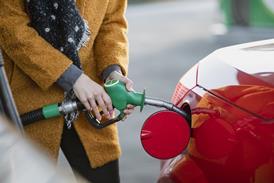






It was only a few months ago that a senior officer from Lincolnshire Police said people driving off from petrol stations without paying for fuel may not be “having a great day”. Given such crimes almost always go unsolved, that attitude may be prevalent amongst other high-ranking officers.
Problem is, it’s incorrect, as having spent a fair amount of time behind the tills of a petrol station, I can confidently say that while a (very) small minority of drive-offs may be innocent mistakes, the vast majority are not.
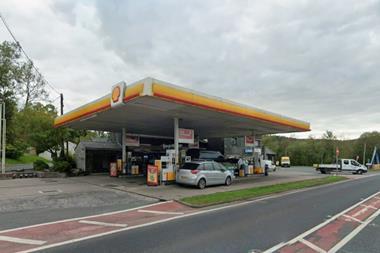
Perpetrators often come in during busy periods, choose a corner pump as far away from the kiosk as possible, perhaps wear a baseball hat or have their hood up, and disappear from the forecourt briskly, but not so quickly as to draw attention to themselves. One also develops a gut feeling about such things, and people on the rob often simply look, well, dodgy.
Our recent investigation into drive-offs reveals that an estimated £4.6m worth of fuel was stolen in 91,000 incidents across 2020-2024, and while figures like would require a lot of people to have a lot of bad days, they’re also the tip of the iceberg, as estimates hold that around £30m of fuel is stolen each year drive-offs.
Retailers despair at the lack of action being taken over this issue, which may explain why our data only scratches the surface, as many forecourt managers don’t bother reporting fuel theft as they know from bitter experience that nothing is likely to be done. This, despite the fact that petrol stations usually have crystal-clear ANPR data and CCTV footage of such incidents just sitting there, waiting to be reviewed by officers.
Worryingly, data shared with us by specialist forecourt-security firms indicates that more than one in 10 drive-offs is committed in a vehicle with dodgy number plates or no registered keeper; based on our figures that’s more than 9,000 such incidents a year, and many, many more given the full scale of the issue.
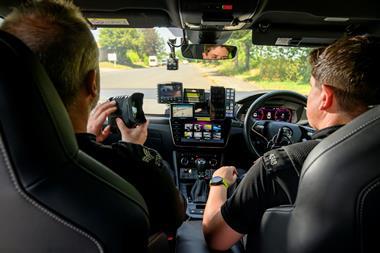
Either way, fake and cloned plates and driving an unregistered vehicle are both crimes in and of themselves, and ones that indicate not just premeditation, but suggest links to more serious crime. With police cars routinely fitted with ANPR systems that would alert officers to such issues, you’ve got to have a good (IE bad) reason to fit moody plates to a car, as doing so runs risk of being pulled over and arrested.
Aside from potential links to organised crime, something senior officers told me is very much a reality where retail theft is concerned, there are also worrying implications when it comes to society at large.
Because if up to 94% of drive-off investigations are ended with no suspect being identified, such crimes are effectively legalised. This links to the ‘broken windows theory’, which holds that if low-level crimes go unpunished, an impression grows within society as a whole that law-enforcement is weak or a low priority, leading to an overall increase in crimes, including more serious ones.
Police are certainly under-resourced and do a much tougher job than most of us, and this is not a criticism of individual officers – but it should be a wake-up call to senior cops, who need to rethink how they approach fuel theft.
Because officers have, in the ANPR data and CCTV footage compiled by forecourts and security firms, a vast lake of gift-wrapped evidence, just waiting for someone to bother to look at it. If police can send automated text messages to retailers closing their cases within hours of a crime being reported, then, because a car’s number plate immediately ties it to its owner, officers can send similar text messages or letters to drive-off perpetrators telling them police are aware of what they have done.
Such an approach would bring about a significant drop in memory lapses and ‘bad days’, I’d wager, while those who deliberately carry out drive-offs would soon get the message that law enforcement was onto them. As for cars on moody plates, who knows what crimes officers could unravel if they started pulling at those threads?
As someone with no direct experience in law enforcement (save for reporting it for years and enjoying the odd ‘ride-along’ with traffic cops) my ideas about how to approach this issue may need some fine tuning, but a dedicated task force of half a dozen officers liaising with the big forecourt operators and putting their coppers’ noses to use would be a good start. A presumption that senior officers will instruct constables to ask retailers to share CCTV and vehicle registrations would also be welcome.
This is a serious issue with significant implications for society, and while journalists and retailers are doing their bit by alerting police to the issue, it is the responsibility of the police to actually do something about it.
What was it those old public-information films used to tell us? Ah yes. Crime: together we’ll crack it.