












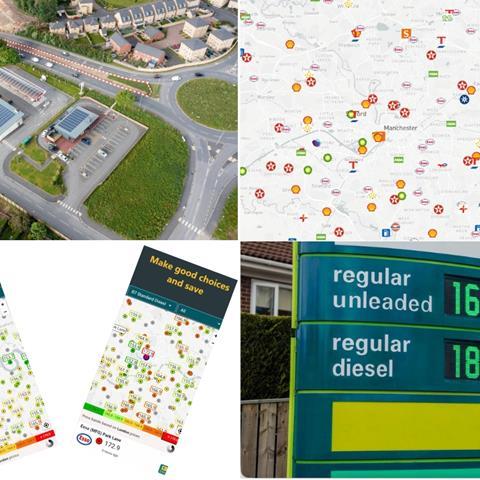

From 2 February, the UK fuel retail market entered a new phase. The introduction of Fuel Finder represents a structural shift in how customers choose where to buy fuel and, by extension, where they shop, eat and refuel in other ways.
The outcome of formalising price transparency is likely to be a customer who is more deliberate, more informed and more willing to change habits. That has implications well beyond fuel margins.
Based on experience in other markets, we know the customer base will split into:
- “Need” – those who must buy cheaply
- “Want” - those choosing to find a cheaper offer (includes the “grey hair” buyers with time and tech skills to search)
- “Switchers” – those moving to “Want” or “Need” as prices rise
- “Don’t care” – company card buyers or the more affluent
The percentage of each group will vary by site [ACCC].
Why price transparency matters beyond the pump
Fuel has always been a traffic driver. For many forecourts, it remains the primary reason a customer chooses one location over another. What changes with Fuel Finder is how easily that choice can be reassessed. As price comparison becomes frictionless, retailers may see increased volatility in fuel volumes as customers trial alternatives, greater sensitivity to even small price differentials and more frequent switching between sites within short drive times.
The knock-on effect is that shop, food to go, coffee and other services which depend on fuel-driven footfall become exposed to pricing decisions made elsewhere in the local market.
Retailers adopting a ’cost plus’ approach will realise that lowest price is not a complete strategy as factors other than price become more important.
Don’t reply on price alone: Understand what is changing
The immediate reaction to Fuel Finder may be to focus narrowly on price matching. The more strategic question, however, is what competitors are actually doing and whether price changes are isolated tactics or part of a broader effort to retain customers.
In practice, retailers may see competitors:
- Adjust pricing more dynamically by time of day or local conditions
- Reposition fuel prices while investing more heavily in shop offers
- Bundle fuel competitiveness with improved convenience, food or loyalty propositions
Monitoring and understanding these moves demands more than anecdotal observation. It demands fact-based visibility of how the market is evolving, not just where prices sit today.
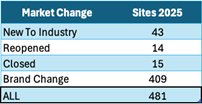
In 2025 there were 481 significant market changes. [Informed Sources]
That’s one in 20 sites changing in your local area.
Seeing the market as customers do: Re-evaluating your offer
Retailers that can see what is changing across their local market and how quickly, are better placed to respond with confidence rather than reaction. Market intelligence can help answer questions such as: are competitors sustaining lower prices, or are changes short-term tactics? Has a competitor changed the frequency or timing of its price moves? Are competitors compensating for fuel price changes with adjustments to offer, layout or services?
By visualising market changes and benchmarking against nearby sites, retailers can separate signal from noise and avoid chasing every price move without understanding the wider context.
Watch the short video to see how to view market changes in a network: https://youtu.be/wPfQ9NhmkVw
Using data to inform smarter decisions, not just faster ones
One of the risks in a more transparent market is over-reacting. Price wars are rarely sustainable, and margin pressure at the pump can quickly undermine investment elsewhere on site witness the German fuel retail market, where prices can change up to 35 times each day per site.
Fact-based market data allows retailers to be alerted promptly to changes, assess whether competitive pressure is structural or localised, identify gaps in non-fuel offers within their catchment and prioritise operational or investment decisions based on evidence rather than instinct. Understanding drive-time competition may reveal, for example, that a price-aggressive competitor draws fuel volume but lacks complementary offers creating an opportunity to compete on convenience, food or services instead.
Price transparency is a factor, not the whole story
Price transparency does not, by itself, determine winners and losers. What it does is accelerate existing trends: greater consumer choice, faster switching and higher expectations. Retailers that respond best are likely to be those that treat transparency as a strategic input, use market data to understand how competitors are adapting and make targeted changes that reflect their local market realities.
Looking ahead
The speed and visibility of competition is changing. In a market where customers can compare instantly, the advantage shifts to those who can interpret what the market is telling them and act accordingly.
Data alone does not create competitive advantage. But used well, it can reduce uncertainty, highlight opportunity and support better-timed, better-targeted decisions as the market adjusts to a more transparent future.
Retailers interested in exploring how market data can support decision-making in a more transparent fuel market can find further insight and contact details by visiting Informed Sources Group.