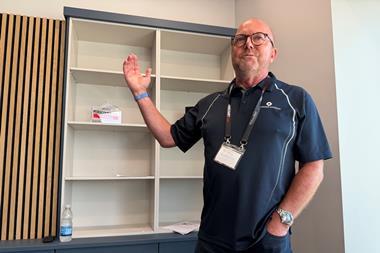







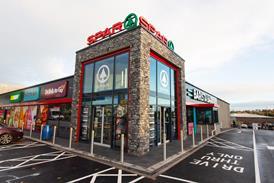








Co-op Wholesale has been ambitiously expanding into the forecourt sector, now supplying nine of the Top 50 Indies. But it is not stopping here, says its business development & growth director Ian King, appointed 18 months ago to win over bigger convenience groups in untapped markets.
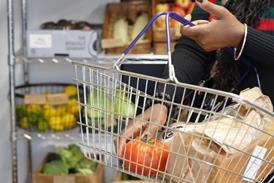
With declining tobacco sales hitting forecourt operators harder than other convenience retailers, Co-op Wholesale is positioning itself as providing a solution to replacing lost turnover with its focus on fresh food for now and for later.
“If your biggest category is down 10 or 15% every year, you are going to have a problem in your forecourt business unless you can find some categories that are growing,” says King.
“Fresh food is growing, so that is the conversation we are having with people, and we have got an increasing number of proof points now of people who have come over to us taking a meal deal and food to go, and they are seeing double digit increases in there.”
King says that he feels like he is “pushing on an open door” with petrol filling stations. Since his appointment, and then his move onto the board last year, with added responsibility for the store format development and mobilisation team, the business has grown to supplying 571 forecourts.
Forecourt sign-up
Around 100 of these sites have joined the group since 2024, including in the past year, 60 company-owned Shell Select sites which take its Proud to Stock Co-op offer: one of several options available to operators.
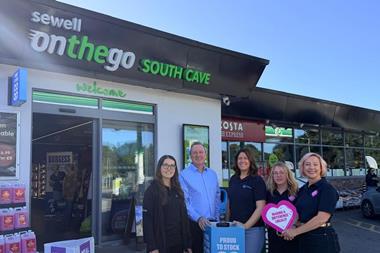
Significant recent wins include Sewell on the go, Tankerford, and five more stores from SGN Retail. Another contract with a major player in forecourt retailing is expected to be announced imminently.
And perhaps more importantly, operators are staying with the former Nisa wholesale branded business, with Ascona re-signing 62 sites and Tout’s its three forecourts, in the autumn.
“I have a really strong team [of five and growing] with expertise, and it feels like for forecourts we have something that really solves a problem,” says King. He started his career as a Safeway graduate and junior buyer, before going on to work at Waitrose, Dixons Group, and then WH Smith Travel for 10 years.

Fresh reigns
Having access to the award-winning Co-op own-brand, including its premium Irresistible sub-brand, and its prowess in chilled, has been a big draw for retailers like Sewell on the go, which has reported a 25% uplift in sales in fresh and sandwiches since switching its 12 sites around Hull from Londis last October.
The Co-op brand is widely well-regarded, although arguably viewed by shoppers at the pricier end, and it has collected much silverware over the years. Accolades for its range during 2025 include a PAPA Industry Award for its pizza, and it was named Convenience Drinks Chain of the Year 2025, in the Drinks Retailing Awards.
“Co-op own-label is the best kept secret. We don’t shout about it in the same way as M&S or Waitrose do, but when people sample the products they say that they are brilliant,” says King.
But flexibility is another draw, with its choice of packages – & Co-op, Nisa, and Proud to Stock Co-op – demanding various levels of commitments from retailers.
Fascia requirements
The ‘& Co-op’ fascia, for example, taken by Tom Highland and featured at Roadchef motorway service areas, requires a more thorough set of operating principles, including commitment to a stronger level of own-brand products being listed, says King.
An expectation of at least 15-20% of the range to be Co-op own-brand would be normal for ‘& Co-op’ operators, and there will be a number of additional requirements to ensure that the brand shows up in the right places, says King.
“We are working through the full set of criteria, and it will probably continue to evolve, but certainly some of what we class as our hero categories, such as food to go, in-store bakery, food for later and food for tonight – areas we are famous for – we would want to see those missions represented. Some other categories, such as ambient grocery, are often less important to these stores.
“If ‘& Co-op’ is above the door, from a consumer perspective you would expect to come in and see a good selection of Co-op products. So it is about how our brand is represented in your store, and what a customer would expect to see,” says King
The Nisa fascia - adopted by MPK Garages and SGN Retail, for example, “offers a more flexible solution” with operators taking a varying degree of the Co-op brand. “Nisa stores range a varying degree of Co-op own-brand, but we’re continuing to see this increase, as more retailers recognise the strength of Co-op’s ethical sourcing, quality standards, and customer trust,” says King.
“Tell us where you want to take your business and we have a solution for you. That flexibility is working for a lot of independents who want to remain independent, and don’t want to be told you must do this or that,” he adds.
“Our retailer partnerships are not a one size fits all approach – we work with all our partners to operate in a mutually beneficial way, whilst being protective of our brand.
“We always say to retailers we are not box shifters, we are not going to drop product and run. We want to work with you hand in hand to build your business.”