








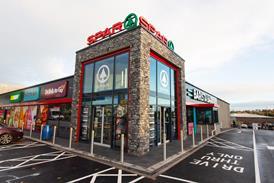

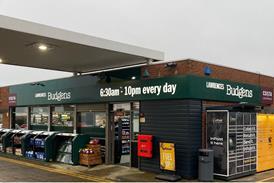







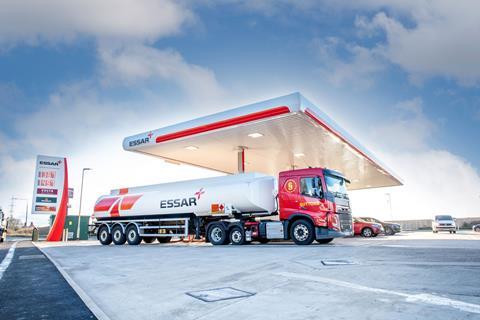
Fuel supplier Essar has acquired SGN Retail, the industry’s fourth-largest independent with a network of 118 sites.
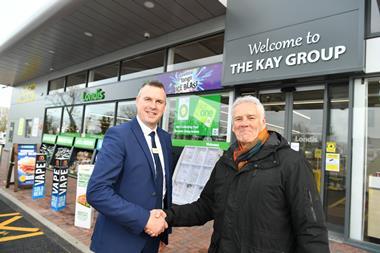
The purchase by its retail division EET Retail – terms of which are not being disclosed – will propel the Indian-headquartered company into the first tier of forecourt operators in the UK and see the apparent departure from the industry of one of its longest-serving personalities, SGN co-founder Graham Peacock.
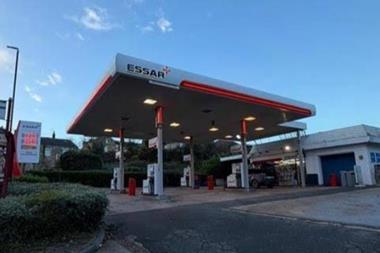
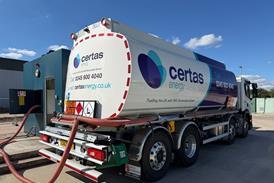
Until now, Essar Group, which owns the Stanlow refinery, has largely been a supplier to the forecourt sector, with 117 sites taking its fuel. However, it owns 19 of its own petrol stations under its EET Retail arm, a division of Essar Energy Transition Fuels (EET Fuels).
It has made several attempts to increase this portfolio in recent years, unsuccessfully bidding for the former company-owned Prax sites and launching an initiative to lease forecourts from existing owners.
The transaction adds 118 forecourts to EET Retail’s portfolio, bringing it to 137 company-owned sites. It also increases the number of petrol stations it supplies to 235 with annual throughput exceeding 650 million litres.
SGN Retail’s Paul Courtney will remain as chief operating officer, and Matt Copland as chief financial officer. They will be joined on the board by EET Retail’s recently appointed chief executive Arvan Ruia, and EET Fuels’ chief executive Deepak Maheshwari, and managing partner Tony Fountain.
Ruia, who joined his family’s business this year, says that for now it will be “business as usual” for SGN Retail. However, over the next three to six months the five-strong board will look at ways of integrating the two business networks.
EET Retail says that it has a “long-term roadmap and strategic objective to scale its footprint to supply domestic fuel directly to 800 forecourts”, representing around 9% of the market by 2031.
It believes that the combination of a future of demographic growth, the rise of multi-car households and the declining number of forecourts in the UK will create an attractive outlook to invest in the forecourt sector.
By supplying more sites with fuel from Stanlow, which already which already produces 20% of the UK’s road fuels, it says that it will be able to eliminate cost inefficiencies for motorists at the pump.
This it says “reverses two decades of UK fuel market fragmentation, replacing an import-dependent, multi-layered supply chain with a direct refinery-to-pump model”.
Over that period it maintains, the UK market has fragmented between fuel retail and fuel production, as oil majors have significantly reduced their domestic refinery investments, which it says has led to a complex and inefficient supply chain, often dependent on imports or complex domestic supply chains.
“EET Retail aims to challenge this dynamic in order to support an efficient and robust supply to UK customers”, it says, while also boosting domestic supply security.
Ruia comments: “Building a scaled, vertically integrated retail forecourt platform is a critical pillar of our long-term UK strategy.
“SGN Retail is one of the highest-quality forecourt networks in the UK well ahead of the market. This acquisition accelerates our plan to build a nationwide, vertically integrated platform of 800 sites, backed by direct refinery supply and delivering competitive prices at the pump for UK motorists.”
Viral Gathani, head of strategic transactions at Essar Energy Transition, adds: “This is a unique, best-in-class opportunity and advances a core part of our M&A strategy. The transaction is backed by a top-tier group of banks spanning four continents, several supporting the UK forecourt sector for the first time, underscoring confidence in our backward-integrated growth model and in the UK fuels and convenience markets.”
The transaction is funded through a combination of cash and a new £250m senior debt facility arranged by a bank group comprising First Abu Dhabi Bank, Macquarie Bank, Mizrahi Tefahot Bank, Natixis, OakNorth Bank, Royal Bank of Canada, SMBC Bank International and Sound Point Capital Management.
EET Fuels and EET Retail were advised by RBC Capital Markets as financial advisor and Herbert Smith Freehills Kramer and Weightmans as legal advisors.