Shell

Source: William Reed

Demand remains high from motorists despite higher fuel prices

Fuel stocks at petrol stations across the UK reached a three-year low in the final week of March, according to government figures, as motorists ignored industry warnings not to panic buy at the start of the Iran conflict.

Tanks across the country averaged 40% of their capacity, according to the latest data from the Department of Energy Security and Net Zero (DESNZ), in a snap shot of 4,900 filling stations.

As UK pump prices increased as a result of the war in the Middle East breaking out on February 28, drivers accelerated their fuel purchasing to get ahead of any further inflation.

Meanwhile some petrol stations were reporting smaller tank loads being delivered and having to wait longer for fuel drop-offs.

However, the Petrol Retailers Association maintains that the declining stock levels is down to a surge in demand rather than any disruption to supply chains.

“Reduced stock levels can be explained by the higher than usual demand at the start of the Middle East conflict. Some forecourts, during the first week, were up by more than 60 per cent on usual sales. It has been busy but there is no problem with the stock situation.”

A DESNZ spokesperson agrees: “Petrol stations in the UK are being supplied as normal and we have a diverse and resilient supply. 

“Both the AA and Fuels Industry UK have been clear that fuel production and imports are continuing across the UK as usual with no issues being reported.”

The last time levels of petrol and diesel fell to this level was in December 2022, triggered by the Russia-Ukraine conflict, according to DESNZ figures.

According to the DESNZ data, five regions have been most affected: The Isle of Wight at 28.5% capacity, South Ayrshire (29.4%), Cardiff and Vale of Glamorgan (30.2%), and Mid and East Antrim in Northern Ireland (30.9%).

However, EdgePetrol, a pricing data provider, suggests that some media coverage of the DESNZ figures, suggesting that fuel stocks are running low across the country, is misleading because on-site petrol stocks tend to average 40-45%.

“Looking back over five years, these levels are business as usual,” says Gideon Carroll, founder and chief executive.

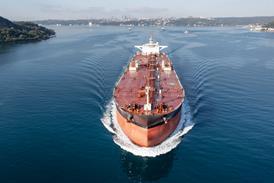
Global oil supplies have been severely disrupted by the ongoing Middle East conflict, with Iran restricting the supply corridor of the Strait of Hormuz, a route through which approximately 20% of all traded oil passes.

The UK however also receives supplies from Norway, the US and other parts of the world and so has faced no shortages, maintains the PRA. “We import 55% of diesel, and only 20% is from the Middle East. I am hearing that there is no problem with product, the issue is with price,” says Balmer.

Wholesale prices went down by 17p a litre on Wednesday (April 8) after the US and Iran agreed a two-week conditional ceasefire announced on Tuesday evening (April 7), says Balmer. On Thursday (April 9) that price went up by 8p a litre, after increasing uncertainty about the durability of the agreement.

“The wholesale price is flying all over the place,” he adds.

Prices meanwhile continue to rise at the pump. According to data from RAC Fuel Watch, today’s average pence per litre for petrol has risen to 158.16 – up by 19.1% since the start of the conflict, and diesel is 191.31p per litre, up 34.4% since February 28.

RAC head of policy Simon Williams says that the figures represent an increase on both petrol and diesel every day for the last 40 days. ”For diesel this is a new record for consecutive daily prices rises since 2015, and for petrol it matches the run of rises seen at the end of June 2022,” he says.

But Williams adds that the rate of price increases at the pump has slowed due to oil falling back below $100 for the past two days. ”This has reduced wholesale costs which should, if sustained, lead to the price of petrol coming down,” he says.

”So, as things stand, we really shouldn’t see unleaded rise any further for the time being and the record diesel price of 199p now shouldn’t be surpassed.”


Topics