Matt Cundrick

Source: NTG Navigator

Matt Cundrick: Forecourt foodservice winners will be defined by flexibility, simplicity and intelligent use of technology

Forecourt foodservice has been one of the most dynamic parts of convenience retail over the past few years, and that momentum isn’t going away. But my predictions for 2026 are not just about growth. This year will be about who adapts, who simplifies, and who quietly optimises their footprint because their model no longer fits the environment.

Digital fascias and the end of the fixed counter

One of the biggest shifts already under way is the move towards digital counter fascias and screen-led menus that change throughout the day. This sounds simple, but the implications are huge.

Instead of physically re-merchandising or committing to one offer all day, operators can now fully switch proposition by time of day: bake-off and coffee through to breakfast and lunch, then flipping screens and messaging to evening meal solutions later on without changing the counter or footprint. Just look at Welcome Break’s “The Good Breakfast” switching to “Chopstix” at the right time every day.

Park Garage Group’s Bakery 79 is already rolling out Pizza 79 to capture that evening and delivery trade. It is a deliberately simplified, high-throughput pizza offer designed specifically for forecourts. It uses existing rapid-cook equipment, a tight core menu and minimal assembly, allowing sites to switch from bakery-led daytime trade into hot evening food and delivery without additional labour complexity or footprint. It’s a good example of a tertiary brand built around operational reality, not theatre.

Changing digital menu displays throughout the day delivers two important outcomes. First, it allows the same equipment to earn money for more hours of the day. Second, it unlocks the commuter and early-evening mission, a segment forecourts have historically underserved.

In 2026, success won’t be measured by a brilliant 90-minute breakfast spike alone. It’ll be about whether operators can create a third or even fourth trading peak using the same space, the same people and the same kit.

Deliver-to-car and last-metre fulfilment

Forecourts are also quietly borrowing one of the smartest plays from QSR (quick service restaurants): removing queue friction.

Building on McDonald’s deliver-to-bay logic, we’re now seeing deliver-to-car and deliver-to-EV-bay trials via proprietary loyalty apps, including from the likes of Bakery 79. The journey is simple: open the app, order food, stay where you are, and have it brought to you.

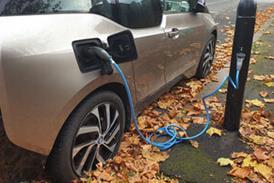
For years, fuel-only customers have been one of the hardest groups to convert into food buyers. Deliver-to-car changes that dynamic completely, especially for electric vehicle drivers who are already on site for 20 to 40 minutes.

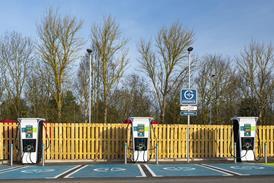
The next wave of competition won’t be about who installs chargers the fastest, it will be about who converts EV dwell time into incremental food spend, rather than letting customers sit in their cars doing emails and spending nothing.

EV charging becomes the new shelf edge

EV charging fundamentally changes the rhythm of the forecourt. Long dwell times create what retailers dream of: a captive audience with time to browse, consider and buy. The real question is how many sites are truly ready for this.

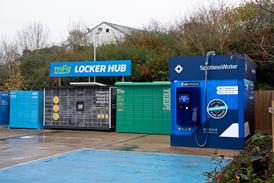
Digital screens on chargers, vacuum units and forecourt furniture are quickly becoming the new shelf edge for food to go. But the shift in 2026 will be from passive brand messaging to live, behaviour-based prompts.

Rapid delivery: from add-on to core channel

By 2026, rapid delivery won’t be an experiment for forecourts, it’ll be a core part of the operating model.

Many sites are already functioning as dark convenience kitchens, listing bakery, hot food and evening meal options on Uber Eats and Deliveroo with strong results. The beauty is that much of this volume comes from equipment and labour that already exists on site.

A dark convenience kitchen, in simple terms, is a food offer produced from an existing forecourt kitchen purely for delivery or click-and-collect, not for walk-up counter service. It allows operators to sweat existing equipment and labour in quieter periods, particularly evenings, unlocking incremental sales without adding seating, front-of-house staff or customer-facing complexity.

Combining this with rapid delivery is particularly powerful in the evening, repositioning the forecourt as the local convenience takeaway rather than somewhere that quietly ’closes’ after lunch.

Late-day offers like curries, loaded fries or bowls can be executed without seating, without front-of-house complexity and without heavy capital investment, tying up money, as long as the original kit and menu have been chosen with flexibility in mind.

Smarter equipment, not more equipment

Equipment strategy is evolving quickly. Operators should increasingly favour agnostic, modular platforms that support multiple menus and brands, rather than franchise-mandated setups locked to a single concept.

Rapid-cook ovens, humidity-controlled hot hold and ventless cooking solutions are becoming standard. The focus is shifting towards fewer touchpoints, faster throughput and consistency under pressure.

There’s also growing interest in automation and robotics. Still early and still niche, but 2026 will be the year these move from an interesting trial to proper operational testing. Not mainstream yet, but definitely one to watch, and one I’m happily taking a long-odds bet on.

A necessary change: not every model will survive

It wouldn’t be honest to talk about 2026 without acknowledging a change that is already under way.

Concepts built around over-complex menus, labour-heavy assembly and narrow trading windows are starting to feel out of step with forecourt realities. Rising Living Wage costs will hit hard, while pressure on space and cost lines is unforgiving.

Time-locked propositions that only really work for a short evening burst, or rely on high levels of theatre and finishing at peak times, are increasingly difficult to justify. Operators will become more selective, favouring offers that flex, travel well, integrate with delivery and work across multiple dayparts.

This doesn’t mean indulgence disappears. It means footprints shrink, partnerships are reassessed, and simpler, more forecourt-fit alternatives quietly take their place.

Dessert counters need to adapt fast or risk being caught in this storm, moving towards tighter menus, faster build times, products that travel well for delivery, and formats that can work across shorter dwell times and multiple dayparts rather than relying on high theatre and long evening-only visits or orders. How can waffles and pancakes translate to breakfast? The US has been living on this for generations!

The bottom line

In 2026, forecourt foodservice winners won’t be defined by who has the loudest brand or the biggest menu. They’ll be defined by flexibility, simplicity and intelligent use of technology.

Smart, simple, profitable propositions that listen to the customer and target them in the right way at the right time will win.

Same space. Same people. Same equipment. More relevance throughout the day.

That’s the real shift.

  • Matt Cundrick is the founder of FTG Navigator, a global boutique food-to-go consultancy team. The business supports forecourt groups, retailers and brands across strategy, proposition design, equipment strategy and operational execution. FTG Navigator specialises in translating insight into practical, scalable food-to-go models that perform at store level.