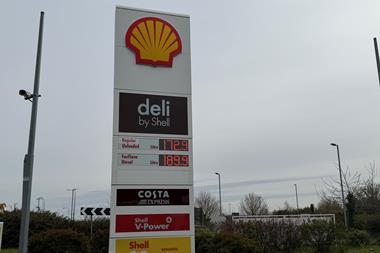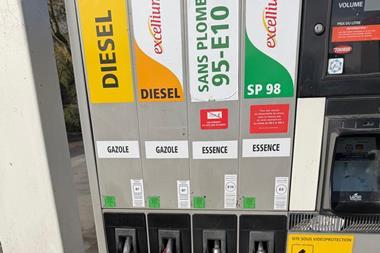

















We’re now more than two months into Donald Trump’s war with Iran; which in itself isn’t something that looked likely when it started, and most of the media attention in this country is inevitably on the price of road fuels – particularly with diesel oil now frequently seen at over £1.90/litre on many forecourts.
Meanwhile, there have been several recent articles from economics commentators warning that Chancellor Reeves’ financial planning has taken a £30 billion ‘hit’ because of the effects of the war. Presumably those estimates are themselves based on the assumption that the war will end in the near future.
Unfortunately, there doesn’t appear to be any sign of that happening any time soon. The military exchanges have become bogged down into a messy stalemate; neither side appears to have the will or ability to deliver a decisive blow, and of course neither wants to be seen to back down and lose face. Instead, we have the rather weird spectacle of both apparently blockading the strait of Hormuz and hence choking off much of the oil trade from the Middle East to the rest of the world. And as this is written, the price of Brent crude has risen again to $115 a barrel. So, the economic damage could continue for much longer.
The fuel price rises have already begun to feed into the monthly inflation statistics, but that’s just the beginning; the cost of transporting goods (from bulk shipping to haulage to local distribution) has also risen dramatically. While some home-delivery services proudly tell us that their distribution fleets are 100% electric, that really only applies to local, door-to-door delivery; the greater part of the delivery-miles prior to that are oil-based. That cost increase can’t be absorbed by the haulage industry and will inevitably be passed on to the retail consumer in due course.
At the start of this, there was already much discussion regarding the government’s planned increase to fuel duty in September, and how that might have to be deferred. In recent weeks the discussion has moved to requests for the government to do something more radical, and much sooner – in the form of cutting the existing duty rate immediately. I’ve also seen suggestions that VAT should be charged on the pre-duty price of fuel to avoid what is referred to as ‘double taxation’. That might sound like a great idea to some, but from an accounting perspective it would be a nightmare: POS and accounting systems are not set-up for that sort of differential VAT treatment of either purchases or sales. Of course, given time and money that problem could be sorted, but it would require a great deal of both. Thus, the only practical solution in the short-term is a straightforward cut to fuel duty.
A deeply unpopular government (has there ever been any other sort?) may be tempted to do just that; but then there’s that £30 billion (and counting) Budget hole to think about. And there may be a very large ‘bail-out’ required in another part of the economy in the coming weeks.
I mentioned last month that there was (and still is) a looming shortage of aviation fuel; but on top of that, the cost of available fuel has also risen considerably. Airlines across Europe have already cut back on the number of flights, with more cuts imminent. Ticket prices have consequently risen – with more to come. The aviation industry employs tens of thousands of people; not just the obvious ones you see on a flight, but the immense infrastructure on the ground: from the airports (which themselves will feel the crunch) out to the likes of catering suppliers and even hotels and parking companies. If ticket prices stop passengers flying, all of those jobs are potentially in jeopardy. Several airlines are already warning that the price of fuel (while they can still obtain it) is putting them at very severe risk of having to stop operations. Only governments have the ability to bail-out the aviation industry, and the begging-bowls are coming out.
However tempted the government might be to win a bit of popularity and cut fuel duty now, I suspect that they will hold-off making any decision on that until September. There are too many other contingencies for them to worry about just now.
This article was written on April 29 by Jan Mikula, who represents nationwide franchise accounting company EKW Group – ekwgroup.co.uk