














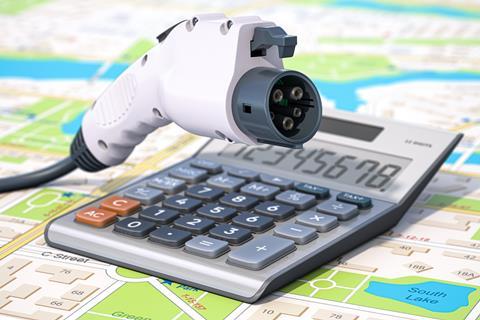
The government doesn’t know how it feels about electric cars: on the one hand it subsidises them via grants, while on the other it hits EV drivers with a new pay-per-mile tax. Now, after a tax tribunal ruling that VAT on public charging should be 5%, HMRC is fighting to keep it at 20%.
The decision follows a first-tier tax tribunal that saw a judge side with a nonprofit outfit called Charge My Street, supported by accountancy firm Deloitte.
The pair argued that ‘de minimus’ rule for electricity taxation – which applies to less than 1,000kWh of leccy being given to someone at a particular premises in a month – means public charging should be taxed at the same 5% rate as home power rather than 20% rate of commercial energy. The judge agreed.
Away from the labyrinthine rabbit hole of the UK’s tax codes, His Majesty’s Revenue and Customs thinks the judge is wrong – ostensibly on principle, but also, presumably, because a reduced VAT rate on public charging would see it lose £85m a year.
Either way, the taxman is launching an appeal with an Upper Tribunal because, the way he sees it, ”the standard rate VAT applies to electricity supplied through public EV charging infrastructure”.
Charging companies and organisations are, perhaps unsurprisingly, up in arms about the matter. The chief executive of charging firm Chargy calls the decision “deeply disappointing”, Faircharge said government should “accept the ruling”, and Believ shook its head at HMRC while saying it is “hugely disappointed”.