










One of the traditional staples of the forecourt store and convenience store, how does bread and bakery factor into a modern offering?
1. How is the category performing?
2. Is bakery still a shopper mission?
3. How can retailers take advantage of these changing shopping missions?
4. How does premiumisation impact bread and bakery?
5. What dayparts are the best for bread and bakery?
6. What are the NPD trends in the category?
7. Where does food to go fit in?
1. How is the category performing?
With tough competition from the multiples in terms of range and price, does the category still justify its place in forecourt and convenience stores? Rachel Wells, commercial director at St Pierre Groupe outlines the opportunity.
“The UK bakery category is worth approximately £1.7bn, and although it is well established, shopper expectations are changing,” she says. “Consumers are increasingly looking beyond purely functional bakery purchases towards products that can elevate everyday eating across breakfast, lunch, dinner and snacking occasions.”
Josh Corrigan, customer development director UK, at St Pierre Groupe, says bread and bakery is still “essential within convenience”. He says it both supports frequent top-up and distress purchases, while also offers opportunities to drive value through more differentiated products.
”Wrapped bread continues to provide the foundation of the category, but shoppers are increasingly looking beyond traditional staples towards products that offer added health benefits, greater variety and versatility across different meal occasions,” he says.
Meanwhile, Jason Geary, master baker at Jason’s Sourdough, adds that the main driver to sales in the channel is top-ups. “Bread is a staple purchase for many households, making it one of the most frequently bought items in the category,” he says. ”Meanwhile, we’re seeing growing demand for alternative options such as sourdough, as consumers look for products that combine convenience with quality, great taste and simple ingredients.
“This is creating opportunities for retailers to broaden their bakery offering with products that appeal to a range of shopping occasions, from breakfast and lunch to snacking and evening meals.”
Back to top
2. Is bakery still a shopper mission?
Speaking of top-ups, what other shopping missions do bread and bakery purchases fall under?
Stewart Linehan, category and insights manager at Country Choice, explains that it’s more nuanced than “I forgot to buy bread”.
“Customer missions in the bread and bakery category lean heavily toward immediacy, reassurance and small‑but‑meaningful upgrades to everyday routines. Shoppers are typically looking to solve a ‘right now’ need, maybe a fresh loaf for lunchtime sandwiches or dinner, a quick breakfast solution, or an impulse treat.
“Bakery plays a dual role by anchoring the store with dependable staples whilst also offering affordable indulgence through pastries, sweet bakery and hot food to go items. The mission is rarely about exploration and nearly always about trust, freshness, convenience, and speed.”
Corrigan says that while the core missions remain top-up, distress and planned meal solutions, there is more to it than that.
“Within these missions, there is a growing focus on ‘everyday health’. Shoppers are looking to make simple improvements within staple categories rather than adopting highly restrictive diets. Rye is a strong fit because it offers clear health cues while remaining familiar and convenient enough for regular use.
“Baker Street’s Rye & Wheat and Seeded Rye loaves give shoppers an easy way to add more variety to everyday meals, while Light Rye helps lower the barrier to entry for consumers who are new to the segment. Its softer texture and milder flavour make it suitable for shoppers moving across from more traditional sliced bread, while retaining the benefits associated with rye.”
Back to top
3. How can retailers take advantage of these changing shopping missions?
Wells offers up some advice for retailers who want to think beyond the distress purchase. “Retailers should make bakery easy to navigate by grouping products around clear shopper missions rather than relying solely on traditional category blocks. Segments such as breakfast, food-to-go, lunch, meal solutions and BBQ can help shoppers quickly identify relevant products and make purchasing decisions more easily.
“Cross-merchandising can also play an important role in increasing basket spend. Brioche buns and hot dog rolls can be positioned alongside burgers, sausages, cheese, condiments and BBQ products, while individually wrapped pastries can be displayed near coffee, chilled drinks and other food-to-go lines. Premium breakfast and brunch products can also be paired with preserves, spreads and fresh ingredients.”
Back to top
4. How does premiumisation impact bread and bakery?
The lipstick effect is certainly relevant for the break and bakery category as shoppers look for that inexpensive treat while living costs soar.
Linehan explains that it’s the sweeter side of life that is seeing the benefit. “Premiumisation is being driven by sweet bakery such as Danish pastries, Viennoiserie, Babkas, filled muffins and stuffed cookies, rather than savoury items, and plays a central role in driving growth in the bakery category because it gives shoppers a clear reason to trade up.
“In convenience, it shows up through more indulgent, café‑style products which is why we recently added a Raspberry & Mascarpone Crest, a premium, café‑style addition perfect for those indulgent, continental‑bakery inspired moments, two new hot‑drink‑friendly butter pastry buns in Cinnamon and Chocolate flavours, a Hazelnut & Chocolate Roll, a Chocolate Babka and a Caramel Babka. Viewed by consumers as affordable luxuries, these richer, visually appealing products tap directly into treat‑led behaviour where shoppers reward themselves with indulgent items, even when money is tight.”
Duncan Chappell, national retail sales manager at Brioche Pasquier, agrees that shoppers want that artisan feel when buying baked goods. “The market for bread and baked goods is being driven by premiumisation, and customers now want authentic products that are created with clean labels and recognisable ingredients. There is also a return to traditional baking methods, so it is no surprise that we have seen a rise in artisanal breads, such as sourdough and farmhouse loaves, both recognisable by their crisp crust and soft interior.
“Alongside this revival of the traditional, the ongoing emphasis on premium products has seen a rise in loaves that differ from classic offerings. No more are customers satisfied with the mundane choice between white or brown, but many now crave breads in more interesting and convenient formats. Many of these are influenced by global cuisines with popular choices now including Turkish lavash, Japanese milk bread and French brioche, all of which add an extra flavour to toppings and sandwich fillings.”
Geary adds that shoppers being under pressure helps the category. “Consumers are increasingly time-poor, with 2.2 billion fewer dinner occasions involving more than 30 minutes of preparation compared to five years ago. Shoppers are shifting towards premium products that deliver strong taste credentials while meeting key health priorities including protein, fibre, and the absence of additives and preservatives. As a result, convenient, ready-to-eat options are becoming increasingly central to both on-the-go and at-home occasions.”
Back to top
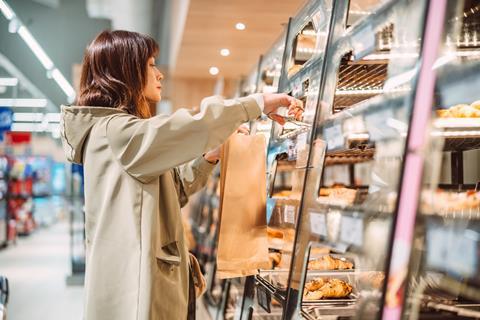
5. What dayparts are the best for bread and bakery?
With busy stores to manage, retailers and their teams need to prioritise certain categories at particular times of the day. Which ones work best for bread and bakery?
Linehan advises retailers to focus on the early part of the day but not to overlook the evenings. “Breakfast and brunch remain key growth occasions, with many retailers using morning goods and viennoiserie as part of a meal deal alongside a tea, coffee, hot chocolate, or other beverage. Moving to the other end of the day, we continue to see sales of our Flatstone Pizza Co. pizzas grow as consumers look to grab something for dinner on the way home. And, talking of eating at home, we have recently seen a spike in sales of rolls, baps and baguettes as shoppers stock up on these on their way home for a barbecue during the recent hot weather.”
Chappell believes a consistent approach to the category is needed. “As a staple of British diets, bread and bakery products drive steady sales throughout the day. In the morning, bread and pastries work well for on the go or as part of a more indulgent and leisurely breakfast. At lunchtime, these products can become a convenient snack or be used to make sandwiches with customers’ favourite fillings. In the evening, shoppers often visit convenience stores to top up on bread and baked goods for dinner. This is especially true in warm weather, when spontaneous barbecues or small gatherings can prompt last minute demand for brioche rolls and sweet bakery treats for dessert.”
Meanwhile, Corrigan says the category has evolved along with shopper habits. “Flexible working patterns and more fluid eating habits mean shoppers increasingly want products that can work across several occasions, rather than serving only one specific meal. Baker Street’s rye range supports this need, with products suitable for everything from quick weekday toast and lunchtime sandwiches to more elevated open-topped meals and lighter suppers.
“Retailers can maximise the opportunity by showing shoppers how products can be used throughout the day. Merchandising rye alongside sandwich fillings, eggs, spreads, smoked fish or soup can help communicate versatility and encourage additional purchases.”
Back to top
6. What are the NPD trends in the category?
Country Choice’s Linehan says indulgence is key in the category. “Our NPD is focussed on indulgent flavour profiles, café‑style sweet bakery and social media friendly treats as witnessed by the launch of our Pistachio Croissants, Biscoff Croissants, Raspberry & Mascarpone Crescents, Chocolate & Hazelnut Rolls, Babkas, topped and filled muffins and stuffed cookies.”
Corrigan adds that a key direction for NPD is accessible speciality bakery – products that bridge the gap between traditional staples and more differentiated breads. “Shoppers want new flavours, textures and benefits, but they still expect bakery products to be convenient, versatile and suitable for regular consumption.
“This means innovation is increasingly focused on taking growing segments such as rye and sourdough and presenting them in formats that feel familiar to mainstream shoppers. Baker Street Light Rye reflects this approach. The 500g loaf is made with a sourdough starter and offers a softer texture and lighter flavour profile than more traditional rye breads, helping bring new shoppers into the segment.”
Finally, Geary says that health is a massive focus for shoppers right now.
Rising awareness of ultra-processed foods (UPFs) has also led more consumers to scrutinise the ingredients in what they consume. In fact, 64% of shoppers claim that they try to minimise UPFs in their diet. Consumers are increasingly seeking products made using traditional baking methods and recognisable ingredient lists that align with perceptions of cleaner, less processed eating. For bakery manufacturers and retailers, this presents an opportunity to focus on quality, nutritional credentials, and clear product messaging, rather than volume alone.
“The launch of Jason’s Sourdough Everyday Protein Rolls, following the success of its Protein Loaf, directly reflects this trend, offering a more nutrient-dense option while maintaining the brand’s focus on simplicity and great taste.”
Back to top
7. Where does food to go fit in?
Nothing’s better than walking into a store and smelling some freshly baked bread but how has it impacted the category?
Chappell says food to go has entered the premium world. “The recent rise of food to go has greatly benefited the bakery category with these products being seen as a more premium offering when it comes to meal deals and snacks. This creates opportunities for upselling, delivering customers a high quality and delicious treat that can be enjoyed on the go. Grab and go bakery sales further increase when it comes to multipacks of individually wrapped baked treats as these are both convenient and cost-effective, providing on the go snacks that can be enjoyed all through the week.”
Linehan explains what lines work best in the sub-category. “Our bestsellers, based on what our retailers are buying, are Parisienne baguettes, batched rolls, and speciality breads, with many expanding their fresh bakery range to include speciality breads such as sourdough and organic loaves.“



No comments yet