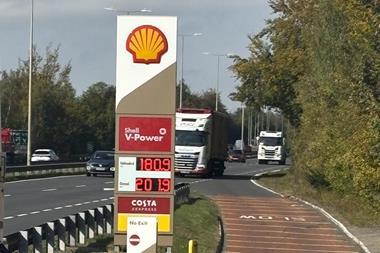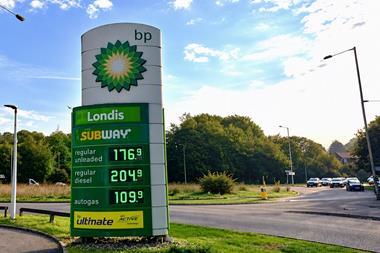










You’ve got to hand it to the Competition and Markets Authority: it must take a certain strength of mind to ‘monitor’ fuel prices without acknowledging that tax is by far the biggest single reason why petrol and diesel are so expensive.
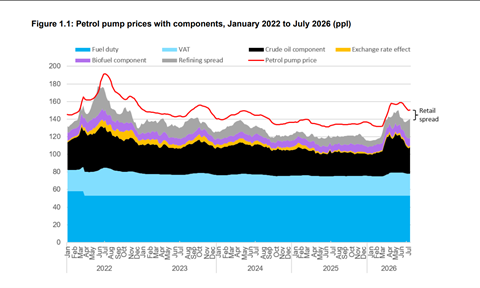
I’m confident a class of primary-school children would successfully identify that the blue sections representing fuel duty and VAT occupy a disproportionate amount of real estate in the CMA’s chart.
But rather than consider this, or the fact the Treasury is making £90m extra a month thanks to the increased VAT receipts that have gone hand-in-hand with recent fuel-price rises, the CMA prefers to have (yet another) pop at forecourt firms.
Margins remain “significantly above levels seen before the start of the conflict” and are “at or above the historically high level observed in 2025”. Historically high, significantly above – those words have a nice, dramatic ring – never mind the fact that the current margin on fuel is 11.2 pence per litre, or 6.5%– hardly a heady figure, especially given that’s before staff and site costs are taken into account.
The CMA is “concerned” (note the patronising, almost parental choice of word) that the majority of retailers deploy what it terms “passive pricing strategies”, as if forecourt firms are taking a laid-back approach and this weren’t one of the major considerations for any self-respecting retailer, while a number of bespoke companies do good business by offering price-strategy analyses and advice to the sector.
But the CMA knows best, you see, to the extent it feels confident enough to offer forecourt firms advice on what to do.
Apparently in May and June “some retailers gained a competitive advantage when wholesale diesel costs fell as a result of their purchasing strategies”, but they “did not immediately pass these cost reductions on to drivers in an attempt to gain market share” (the big meanies). Just drop your prices and get more customers – easy, no?
Well, not quite. Because in the previous paragraph of its own report, no less, the CMA says retailers used pricing strategies to “manage inventories” in April and May – IE if sites followed the CMA’s advice and reduced their prices as quickly as possible, they would likely have seen price-savvy motorists drain their underground tanks.
So in the same breath as saying forecourt firms didn’t drop their prices quickly enough, the CMA tacitly acknowledges that had they done so, they could have run dry – something that has the very real potential of causing to a fuel crisis, as drivers are spooked by out-of-action pumps.
But the CMA has more dim-wittedness to offer where diesel prices are concerned. The watchdog says its analysis indicates “retailer responses to reductions in wholesale diesel costs may have been more delayed” than those for petrol, but then fails to explain this, saying “a more detailed assessment” is required.
Well, let me save them some legwork, because it’s theft and fuel cards. Thefts increase alongside prices and diesel is stolen more frequently than petrol, while most fuel bought via fuel card flows through the black pump and makes retailers just 1p per litre profit, if they’re lucky. These aspects, combined with ballooning wholesale prices, explain why retail diesel prices take longer to drop – there are more losses to make up, and this requires slower price reductions.
Thing is, the CMA knows this, because they have had it explained to them at length, and repeatedly. So either this concept is too complicated for them to grasp, or it doesn’t suit their narrative to do so.
The funny thing is that while the Competition and Markets Authority doesn’t seem to like fuel retailers, it should actually be thanking them. Because since the Iranian crisis began the forecourt sector has collected an additional £500m or so in VAT receipts, which is enough to run the CMA for around four years. Well, all those lanyards and ergonomic keyboards don’t come cheap, I guess.