












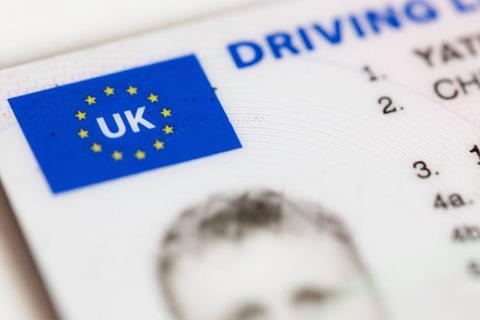
The additional weight EV battery packs bring has caused the government to change driving licence laws, in a bid to make electric cars more practical for motorists. Electric vehicles with a mass of up to 4.25 tonnes can now be driven on a normal car licence.
Previously, a Category B (car) licence brought with it a 3.5-tonne limit for the maximum authorised mass (MAM); this is the weight of a vehicle when it is fully laden, meaning a 2.9-tonne car would be at the limit for a normal licence holder with five 100kg adults and another 100kg of luggage on board.
But with electric vehicles regularly weighing over 2.5 tonnes, and some approaching close to three tonnes thanks to battery packs that weigh several hundred kilos, EV drivers could easily find themselves skirting close to weight limits. As an example, the electric Rolls-Royce Spectre weighs 2,890kg on its own, partly thanks to its 700kg battery pack, while the Mercedes EQS (also electric) weighs 2,810kg unladen.
The issue of mass is even more pertinent with electric vans, some of which weigh over 3,000kg before a single box is loaded, or a driving has got on board, limiting cargo capacity significantly for a normal licence holder. The heaviest version of the electric Ford E-Transit has an unladen mass of 2,710kg, while the long wheelbase version of the Mercedes eSprinter weighs 3,026kg when empty.
Masses like this have prompted the Office for Zero Emission Vehicles, an offshoot of the government’s Department for Transport and the Department for Energy Security and Net Zero, to change the rules, increasing the MAM by 750kg for EVs, allowing people with a normal car licence to drive electric vehicles with a MAM of up to 4,250kg.
Electric vehicles with specialist equipment to support disabled passengers can have a MAM of up to 5,000kg and be driven on a normal licence, though the extra 750kg “must be attributable to the specialist equipment”.
The rule change also applies to any hydrogen powered vehicles that may emerge in the future (most exist as part of pilot schemes at present), though the MAM limit for petrol, diesel and hybrid vans remains unchanged, at 3.5 tonnes.
Combined trailer and vehicle MAM limits also remain largely unaffected, with a combined MAM of 7,000kg, meaning the fully loaded car, and fully loaded trailer must weigh no more than seven tonnes. The electric vehicle can still weigh 4,250kg fully laden and be driven on a normal licence, but if this is the case the trailer MAM is reduced to 2,750kg, rather than the 3,500kg a trailer hitched to diesel van with a 3,500kg MAM could tow. Vehicle and trailer combined MAMs remain at 8,250kg for people who got their licence prior to 1 January 1997.