












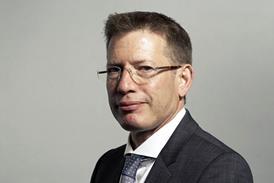
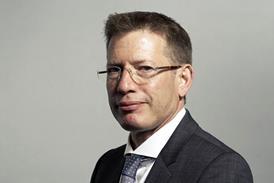



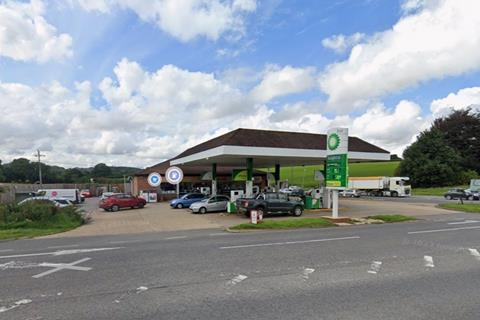
Forecourt stalwart Graham Peacock blames government inheritance tax policies for his decision to exit the petrol retail sector prematurely with the sale yesterday of SGN Retail to Essar. But he says it is not out of the question for him to return for a second time.
Peacock, who has now been behind two of the biggest forecourt divestment deals in recent industry history, says he still has a passion for petrol retailing, having bought and sold some 2,000 sites with his business partner Sue Tobbell since 1997.
The 76-year-old, who founded the 118-strong forecourt company SGN with Tobbell 10 years ago, said that they decided to sell after she was involved in a serious car accident 18 months ago.
In an exclusive interview, he told Forecourt Trader how the experience brought into focus how much of an inheritance tax burden they would both pass onto their respective families: an amount which would be expected to be paid within six months of their death.
It is a problem which is troubling fellow operators, and was the driver for yesterday’s announcement, which vaults Essar into the major league of UK forecourt operators.
The alternative, the pair feared, could be that their children would be forced into a so-called ‘fire sale’ of the business to release funds quickly and avoid penalties. He says that he “could not stomach” the idea.
“So l’m looking to survive for another seven years with no inheritance tax to pay,” he says, alluding to rules that would allow him to gift at least some of his wealth to his two sons tax-free.
Peacock, who has other business interests, has made a comeback with Tobbell before. The pair launched SGN Retail 10 years ago, after selling MRH, the biggest UK forecourt operator at the time with 448 sites, to Lone Star Funds in January 2016.
The American private equity firm then sold the business to MFG two years later, and Peacock and Tobbell bought back 32 of their former forecourts that the competition regulators forced MFG to offload.
This formed the basis for SGN Retail to emerge as the UK’s fourth largest independent forecourt operator. Its latest financial accounts reported a profit after tax of £18 million on £452 million revenues for the year to March 2026.
Despite the pair having decided to offer the business for sale, that report noted that it was still in acquisitive mood, and was looking to add “quality sites to the portfolio” to “complement the existing network”. In fact, in November last year, SGN added the five sites of family business Rusdene Services to its portfolio.
Peacock says he is undecided on whether he will return to petrol retailing: a career which started for him in 1968 working full-time for forecourt operator Alan Pond. It was not until 1997 that he set up Malthouse, later becoming part of a newly created holding company MRH in 2007, with Tobbell.
Peacock says: “I’d consider going back if the right opportunity comes up.
“In theory I could start again as I have no restrictions, and I still have the passion having been at the thick end of 60 years in the business. I worked hard all my life and don’t intend to give up,” he adds.
“I’ve not had any problems with the market. It is lively, it is profitable at the moment, and who knows what will happen in the future?
“But I’m not sure there are too many opportunities at the right price,” he maintains. “Forecourts are at the top of their market. You will see a number sold at 11 or 12 times their earnings.”
If he does launch a new venture, it is likely to be his son Tom, who was SGN’s property director and previously worked at Gridserve, at his side as Tobbell is retiring.
But Graham Peacock dismisses any suggestions that his son’s experience in the EV world as a business development director might drive a venture for the family in this area.
“When you have petrol and diesel running through your blood, electricity does not seem to make any sense, and I’d question what profitability would come from electric charging,” he says.
“In my opinion, a normal service station on a motorway or trunk road, then yes, charging would work, but a lot of people charge at home, and I don’t see a future for me in standalone charging sites.”