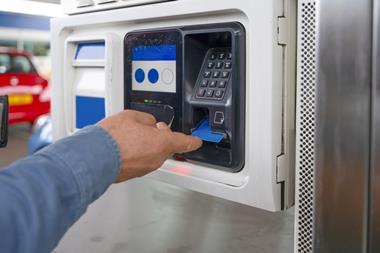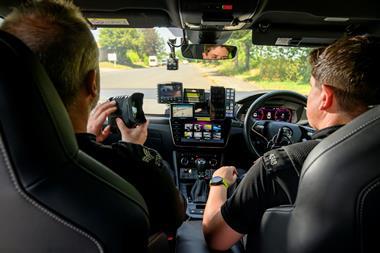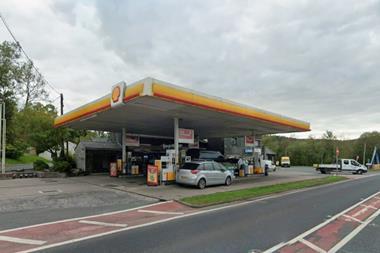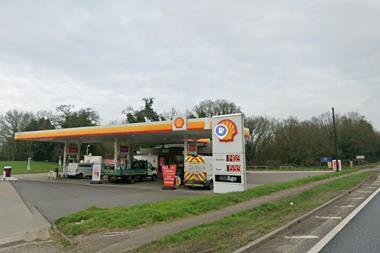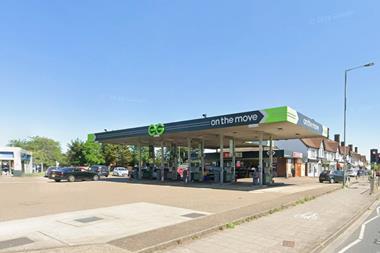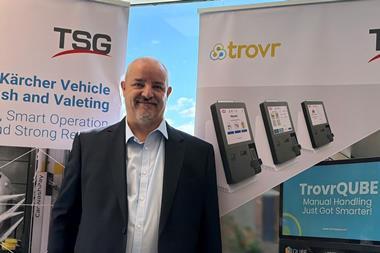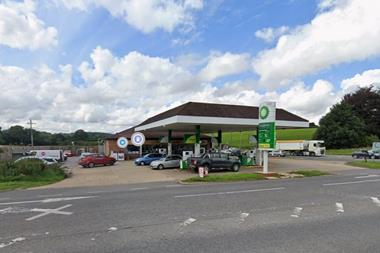














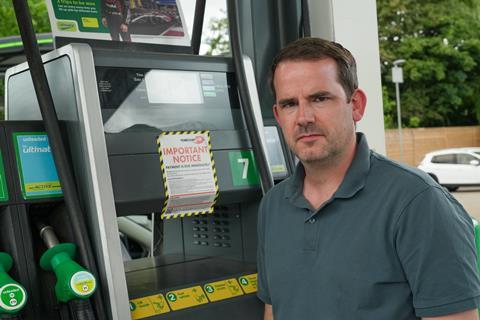
Forecourt Eye and Facewatch are partnering to offer petrol station operators a single crime reporting platform “in an urgent response” to the growing number of incidents at the pump and in the shop.
It is a “genuine response to try and find another level of protection” for not just fuel and shop theft, but to protect staff too from anti-social behaviour, violence and abuse, says Forecourt Eye.
It estimates that at current rates the sector is on track to lose around £70.7 million a year in unpaid fuel value alone.
The app will be free to operators who already use Forecourt Eye’s fuel debt recovery and automatic number plate recognition (ANPR) technology from September.
Users do not have to sign up to the Facewatch facial recognition service, although it is expected that many will. And the idea is to provide a pattern of incidents at a single site or in an area giving police a more compelling reason to investigate.
“It will support the police by basically cutting down their investigation work by joining the dots of single incidents,” says a spokesperson.
Forecourt Eye’s latest analysis shows that unpaid fuel incidents – including no means of payment (NMoP) declarations and drive-offs – are up 20% above the level recorded before the conflict in Iran led to a sharp increase in fuel prices.
Based on a sample of 550 forecourts, the analysis recorded an average of 189 incidents a day in the five months following February 28, compared with 158 a day in the preceding five months.
The figures suggest that daily incidents have risen from around 2,400 to approximately 2,872 across the UK’s network of 8,350 forecourts, says Forecourt Eye.
The estimated volume of fuel involved has increased by 24%, from 87,800 litres to 108,900 litres a day, while its estimated daily value in unpaid fuel has risen by 48%, from around £131,000 to £194,000.
If sustained, it warns, the current rate would equate to approximately £70.7 million a year in unpaid fuel value – around £22.9 million more than the pre-conflict period.
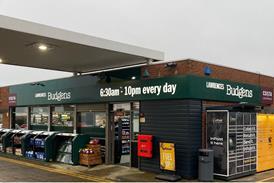
Ben Lawrence, a customer of Forecourt Eye and Facewatch, and director of Lawrences Garages, says the app’s joined-up approach to beat crime could potentially be “a gamechanger”.
He says that his fifth generation family business, which has operated petrol stations for more than 100 years, has experienced a 50% increase in drive-offs and NMoP, since the start of the Iran conflict.
Also thieves are becoming increasingly brazen making off with baskets full of groceries, he says. And his employees are also facing greater levels of abuse from customers frustrated by the cost of living and rising fuel prices.
He therefore welcomes the initiative. “Modern forecourts are about far more than fuel. We now have a significant retail offering, so technology that helps us report crimes more quickly and effectively is increasingly important,” Lawrence says.
“If it can also help create stronger evidence and lead to convictions against repeat offenders, then for us I think that is potentially a gamechanger.”
Forecourt Eye managing director Michelle Henchoz says that forecourt operators have been calling for one place to manage unpaid fuel and ANPR intelligence through to shop theft, violence and police reporting.
“This partnership delivers exactly that while fitting seamlessly into the way they already work,” she says. ”As offending becomes more organised and more sophisticated, operators need joined-up technology that helps them protect both their forecourt and their convenience store.”
Nick Fisher, chief executive of Facewatch, adds: “The distinction between fuel crime and retail crime has largely disappeared. Modern forecourts face the same prolific offenders, violence and abuse experienced across the wider retail sector.
“By combining Forecourt Eye’s expertise on the forecourt with Facewatch’s crime management capability, we’re giving operators a single platform to prevent crime, manage investigations and help police tackle repeat and violent offenders.”