



















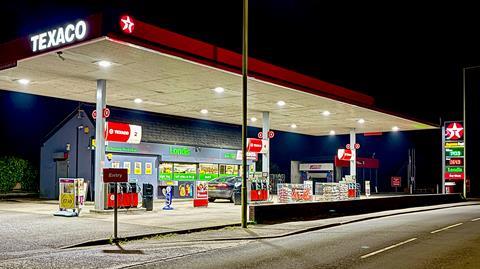
The average forecourt transaction price has risen by 69% in five years, according to commercial property firm Rapleys, which says demand for sites continues to “significantly outstrip supply”.
The company’s report on ‘alternative’ property assets, under which filling stations sit, says forecourts are “an operationally resilient, income-generating asset class with a credible long-term future”, and that property values “remain robust”.
Rapleys estimates the fuel retail sector is worth £27bn, and says that while the pace of new-build forecourts has “picked up”, planning processes and highways constraints “act as a natural brake” for new sites coming on stream, with demand for sites continuing to outstrip supply.
While the number of petrol stations in the UK continues to decline, new-to-industry sites and reopened dormant sites are “partially offsetting closures”.
Other trends described by the report include MFG’s acquisition of Morrisons’ 337 filling stations, and Fuel Finder, which Rapleys believes “will take time to materially shift competitive dynamics”, but is expected to ultimately have a “meaningful” impact on “pricing transparency and margin discipline”.
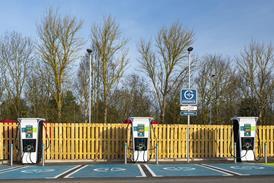
The company also notes that EV charging “remains the sector’s most debated topic”, with chargers often taking 10 to 15 years to reach maturity post-installation, though firms constructing new forecourts have a “a natural advantage” here, as integrating the necessary electric infrastructure is easier than retrofitting extant forecourts.
Ultimitely, Rapleys considers forecourts to be ”one of the most resilient corners of the UK alternatives market”.