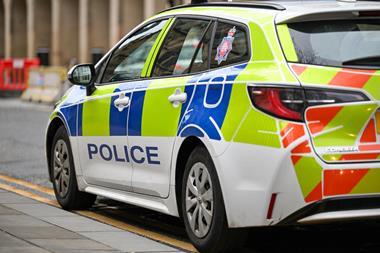


















The Department for Transport has formed a new roads policing team to tackle the scourge of illegal number plates, which are fitted to as many as 2.8m cars and are often used in conjunction with drive-offs.
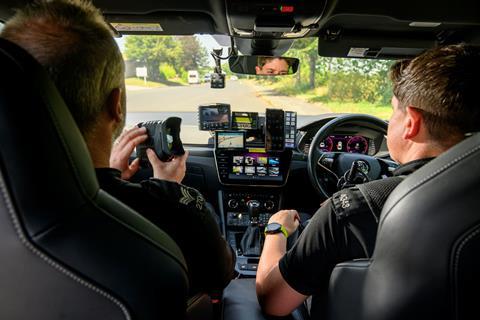
The National Roads Policing Coordination Centre will see English police forces share intelligence, while also trialling new technology such as electronic goggles that flag when someone has treated a number plate to make it invisible to cameras.
As well as helping thieves steal fuel, illegal plates are used to evade speeding fines, parking penalties and clean-air-zone charges, while organised criminal gangs are known to fit them to evade detection.
Dodgy number plates come in a variety of forms, with cloning – which sees a car fitted with a different registration from a similar car, typically copied from online advertisements – replaced in popularity by ‘ghost plates’. The latter feature sprays, films or component materials that block the infrared light that ANPR cameras use, thus making them unreadable to traffic cameras and forecourt ANPR systems.
The government is stopping short of a root-and-branch reform of the number plate system, however, despite industry experts warning successive administrations that this is necessary.
There are currently around 40,000 firms registered to make and supply number plates in the UK, while plates are comprised of materials that can be easily sourced, making it straightforward to make up fake or unreadable plates.
This is in stark contrast to some European countries, where number-plate manufacture and supply is effectively a state endeavour, and vehicle registrations are treated similarly to passports.
Commenting on the new task force, Chief Superintendent Marc Clothier, Deputy National Coordinator for the National Roads Policing Coordination Centre, says the organisation’s mission “is to tackle the biggest risks to road safety, enhancing and developing the police response to criminality both on and off the roads”.
He adds: “The police forces involved in our ghost plates operation have shown how effective a targeted and intelligence-led approach is in tackling offenders…the testing and sharing of new approaches and developing innovation has been incredibly valuable and we look forward to building on this as we progress to our next operational focus.”
Policing and Crime Minister Sarah Jones comments: “We are determined to give police every advantage in the fight against serious and organised crime, while making our roads safer for everyone.”