











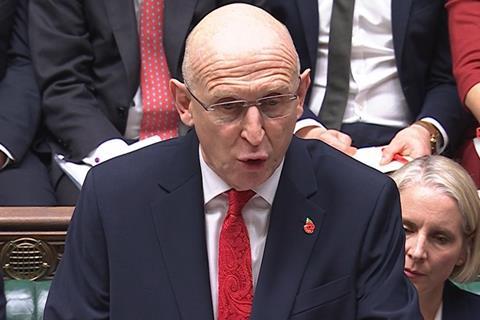
The Chancellor of the Exchequer, John Healey, has used his Budget to cancel the planned 5p increase in fuel duty and announce the minimum wage will increase by 3.9% – though these measures have met with a lukewarm response from forecourt operators.
The fuel duty increase, which was to manifest as a winding down of the 5ppl ‘discount’ introduced in 2022, was set to add 3p to a litre of petrol or diesel in January, followed by a further 2ppl rise in March.
Healey has announced, however, that these increases will no longer go ahead as planned, freezing fuel duty at its current 52.95ppl rate until July 2027 to give “breathing space” to families and businesses.
The Chancellor also confirmed that the National Minimum Wage, which applies to those aged 18 to 20, and the National Living Wage, which applies to older adults, will both rise 3.9%.
The increases mean that from April 2027 the NMW will increase from £10.85 to an estimated £11.27, while the NLW will be upped from £12.71 to £13.20, as reported previously.
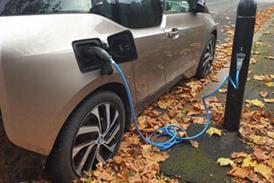
Another measure announced by the Chancellor is that the 0% VAT rate applied to domestic electricity will be extended until July 2027, meaning home EV charging will continue to enjoy its cheap status relative to public chargepoints, to which a 20% rate is applied.
The Small Business Rate Relief threshold for retail, hospitality and leisure companies, meanwhile, was also relaxed, meaning firms in these sectors with Rateable Values (RV) of £18,000 will be exempted from paying rents, an increase from £12,000.
While the RVs of petrol stations will in almost all cases be above £18,000, meaning this measure won’t apply to forecourts, firms with convenience store operations may benefit from it – although the relief increase won’t apply to vape shops.
Industry responses
Tom Dant, managing director of Gill Marsh Forecourts, says that while he is relieved that the fuel duty freeze has been extended, “the Budget does nothing for fuel retailers other than increase our operating costs, mainly in employment yet again”.
He adds: “Forecourt retailers will see no business rate relief due to our rates being calculated on fuel volumes rather than just store sizes.
“All this Budget is going to do is further increase an already high level of inflation due to these higher operation costs having to ultimately be passed onto consumers.”
Ken Kay, founder of The Kay Group, says of the national living and minimum wage increases:
“I guess like most petrol retailers I’m conflicted. There is no doubt the front-end staff deserve this, but it is yet another above inflationary increase, and perhaps the government should do something on where we start to pay employer National Insurance.”
Oliver Blake, who runs Oasis Services in Yorkshire, expresses similar sentiments. Blake says that while he “fully supports” staff “being paid fairly” and believes “good employees deserve to be rewarded”, the NMW and NLW increases “come alongside higher employer National Insurance costs, energy bills, business rates and other operating expenses”.
Blake adds that the fuel duty freeze is “welcome news for motorists and independent forecourt operators”, though he considers it “disappointing that the Chancellor hasn’t gone further”, and that “freezing a tax is not the same as easing the burden”.
Rob Exelby, managing director of Exelby Services, would also have liked the government to have gone further on fuel duty, and describes the Budget as “very disappointing”.
He adds: “Given the increased VAT receipts the government has received over the year’s inflated fuel prices, it’s a shame they’ve not seen fit to reimburse even some of this extra income in the public purse to fleets and drivers by the way of reducing fuel duty, or a VAT cut, even as a temporary measure.”
Goran Raven, owner of an Essex forecourt, says the Budget amounts to the Chancellor “tinkering around the edges” and doesn’t “reduce the burden” fuel retailers are facing, adding that operators are “expected to be happy with no extra increases”.
Ramsay MacDonald, a non-executive director of Top 50 Indie Highway Stops, says “there wasn’t much in there at first sight to help stimulate growth in our sector”, and that the minimum wage increase “will only add costs to the roadside sector”.
Forecourt operator Prem Uthayakumaran says that he too found it “very disappointing that there seems to be nothing there to promote growth and investment in the business.”
Edmund King, president of breakdown and insurance firm the AA, considers the Chancellor “could have gone further and cut fuel duty by an extra 5p, even if only for diesel which is the workhorse fuel”; King dismissed the freeze as a “trick” rather than a “treat” – though he said the “trick” was nonetheless “welcome”.