














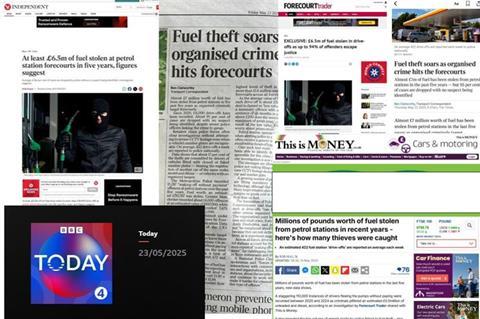
Forecourt Trader’s investigation into the epidemic of drive-offs is being covered extensively in the national media, putting the spotlight on an often overlooked problem for thousands of petrol stations.
Our research found that, depending on the area of the country, as few as 6% of those who leave a forecourt without attempting to pay for fuel are charged, prosecuted, or offered community resolutions.
The investigation featured this morning on BBC Radio 4’s flagship Today programme, and also gained coverage from The Times, The Independent, and Mail Online.
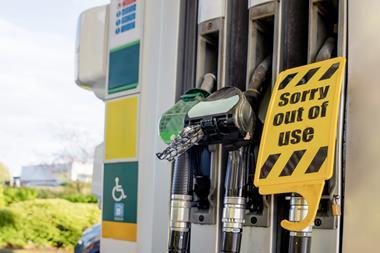
This will have resulted in millions of people being made aware of the extent of the problem, which we discovered runs to an estimated £6.5 million of fuel being stolen over five years in 131,000 drive-off incidents.
The figures were obtained after 33 of 45 police forces responded to our Freedom of Information requests. They are particularly concerning because police chiefs have drawn connections between this type of theft and organised crime.
The Association of Police and Crime Commissioners admitted to Forecourt Trader that drive-offs at forecourts “can be linked to other serious organised criminality”. And it adds that police should not “be complacent about these crimes because they are not victimless or low-level, as is sometimes suggested”.
According to forecourt security firm Vars Technology, around 13% of all drive-offs involve cars fitted with cloned number plates (for example, registration plates bearing the registration of another car of the same make, model and colour), fake number plates, or with no registered keeper.
Our research shows that the problem often worsens when fuel prices rise. On average, 505 incidents were recorded by police of cars driving off without paying at petrol forecourts across England and Wales over the past five years. That rose to a peak of 635 per week in 2022, when fuel prices spiked to record highs.
Forecourt Trader’s Hugo Griffiths, the reporter behind the research, told The Independent he suspects the impact of drive-offs is greater than his figures suggest:
“Retailers despair at the lack of action being taken over this issue, which may explain why our data only scratches the surface, as many forecourt managers don’t bother reporting fuel theft as they know from bitter experience that nothing is likely to be done,” he told the paper.
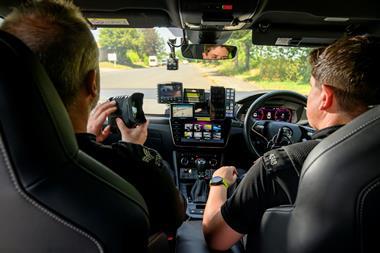
He wrote in a comment piece for Forecourt Trader: “This is despite the fact that petrol stations usually have crystal-clear ANPR [automatic number plate recognition] data and CCTV footage of such incidents just sitting there, waiting to be reviewed by officers.”
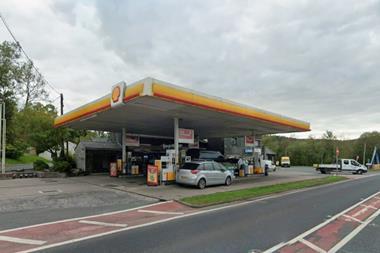
Thanks to Griffiths’ work, our story featured on a 7.40am slot on Radio 4’s Today programme this morning (May 23). The programme’s presenter Amol Rajan spoke to Leza Stephenson, who manages Tolladine Service Station in Worcester. She said that despite being a small, family-owned garage the business was hit by motorists not paying for their fuel once a month, as a result of no-means-of-payment incidents as well as drive-offs.
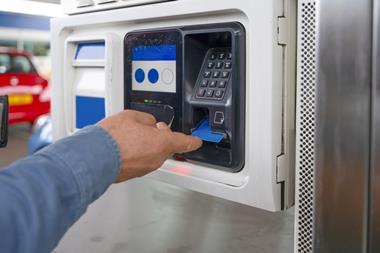
She explained that this particularly impacts the firm because margins “are very, very tight”, and that, in the absence of police action, the only deterrent for drive-offs would be pay-at-pump technology, which has the obvious drawback of discouraging customers from making purchases from forecourt shops.
Stephenson told Forecourt Trader that she welcomed the chance to tell the public about the challenges faced by small forecourt businesses that are victims of this crime. “It used to be cheques bouncing. Now one of our biggest problems is drive-offs,” she says.
As well as gaining coverage in the print edition of The Times, the paper placed our investigation as the third lead story across its online platforms.