


















An official review into the percentages of electric cars manufacturers must sell as the ban on new petrol and diesel vehicles draws nearer has been launched.
From 2030 sales of new conventional petrol and diesel cars will be banned, with hybrids granted a five-year stay of execution, before only zero-emission (IE electric) cars can be sold from new in 2035 and beyond.
But while those targets remain unchanged (for now), concerns over the speed at which manufacturers are being mandated to sell EVs has long been a sticking point.
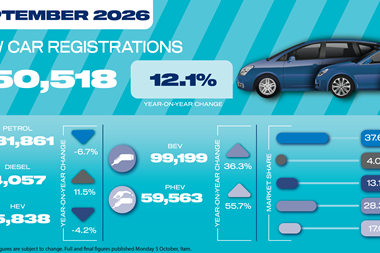
Last year car makers were tasked with ensuring 28% of new registrations went to electric cars, but only managed 23.4%, while 2026, which has a 33% target, is currently tracking at 27.4%.
Horse trading allows manufacturers to ‘swap’ sales credits with EV pure players like Tesla, while firms also get dispensations for selling hybrids, meaning potential fines of £12,000 per petrol or diesel car over quota are unlikely to materialise.
Nonetheless, concerns over job losses caused by car makers throttling back production due to weaker than modelled EV demand, combined with pressure from the unions, has forced the government to launch a consultation that will consider what the percentages for EV sales should be between now and 2030/5.
As things stand, 2027 will see the ZEV (zero-emission vehicle) mandate rise to 38%, while in 2028 car makers are expected to ensure 52% of the cars they sell are electric – almost double the market’s current performance. That figure is then due to rise to 66% in 2029 and 80% in 2030 (allowing 20% of sales to go to hybrids), before 100% zero-emission compliance is required in 2035.
Given ministers are adamant the 2030 ban on sales of new pure petrol and diesel cars, and the 2035 outlawing of new hybrid sales, are not being changed, the government’s options are relatively limited.
One possible change is that a larger number of sales of petrol-electric and diesel-electric cars are allowed, with a new hybrid mandate percentage running alongside an updated electric one.
The consultation on what the figures should comprise is open now and runs until October 23, 2026. Members of the public, car manufacturers and dealers, and chargepoint firms are all able to provide their feedback.
Reaction to the review has so far been mixed. The Society of Motor Manufacturers and Traders (SMMT), which represents the automotive industry, welcomes the announcement, saying while the sector “remains fully committed to a zero-emission future”, the mandate percentages were devised “under very different conditions”.
The SMMT calls the review “a timely opportunity to optimise the pace of change” given targets are “running ahead of current consumer demand”, while the National Franchised Dealers Association is also supportive, saying the review needs to “ensure consumers have the choice and affordability needed to make the transition”.
Robert Forrester, boss of Vertu Motors, is scathing of the ZEV mandate as a whole, saying the new car market “has suffered a number of years of dislocation due to the state intervening” in the automotive sector, with “billions of pounds in discounts on battery electric vehicles” leading to “fewer jobs, lower investment and reduced economic activity”.
The chargepoint sector, perhaps unsurprisingly given its business model depends on there being more electric cars rather than fewer, was less positive about the consultation.
Delvin Lane, chief executive of chargepoint operator Instavolt warns that watering down EV legislation “risks spooking exactly the private capital that’s been building the infrastructure this transition depends on”, while Gurjeet Grewal, chief executive of Octopus Electric Vehicles, the leasing arm of the energy company, says softening the rules would “send exactly the wrong signal”.