

















A planning stunt that sought permission for a 60-metre high, non-functioning wind turbine be erected in a rural area to advertise an EV charging hub was designed to draw attention to rules that bar such facilities from being advertised from the road, its proposer has revealed.
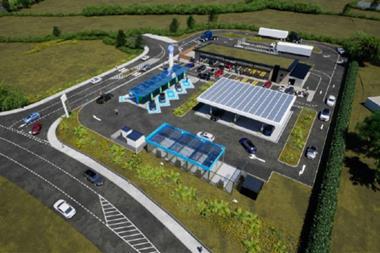
Instavolt, which operates the UK’s largest ultra-rapid charging network, went to the trouble of submitting a planning application for an advertisement feature it knew would be refused: a 60-metre high, non-functioning wind turbine bearing the word ‘Instavolt’, and towering over rural Hampshire.
Planning documents commissioned by Instavolt described the turbine as “necessary to support the utilisation of the EV superhub at Winchester” and said it was “analogous” to landmarks such as the Angel of the North, the chimneys of Battersea Power Station, and HMS Victory in Portsmouth.
The project was refused by Winchester City Council as expected, with the authority deeming it an “incongruous feature” of “excessive height, scale and position”. Members of the public, of whom over 90 submitted objections, went even further, saying the dummy turbine would be “a grotesque gimmick”, an “ugly eyesore” and a “monstrous, cathedral-size advertisement”.
One objecting resident said: “The installation of a non-functional wind turbine risks damaging public perception of genuine renewable energy initiatives, creating the false impression that green technologies are merely cosmetic.”
The height of the ‘turbine’ even meant the Civil Aviation Authority and nearby airfields could need to be consulted due to the risk it would present to aircraft.

In the unlikely event it was granted planning permission, however, Instavolt never intended to build the turbine. Instead, the application was designed to “draw attention to the persistent failure” of the government to change rules that prevent EV charging hubs being advertised from the roadside.
In July last year the Department for Transport announced it would change planning regulations to allow EV hubs to be signposted from major A-roads for the first time.
In October The Times reported, however, that the rules would require hubs to offer at least 12 ultra-rapid bays as well “hot drinks and cooked food for consumption on the premises”, plus two hours of free parking and at least 10 spaces for drivers who were not charging.
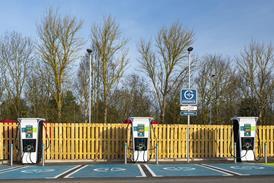
The cooked food requirements would rule most hubs out of contention for roadside signage. This includes Instavolt’s Winchester ‘Superhub’, the UK’s largest such facility, offering 44 ultra-rapid chargers, which cannot be signed from the A34 it adjoins.
Regardless of such details, Instavolt chief executive Delvin Lane says: “A year on [from the DfT’s announcement], we are still waiting for that to translate into action.”
He added: “We’re delivering on our commitments to build critical EV infrastructure using private investment, and we need government to deliver on its promises as well.”