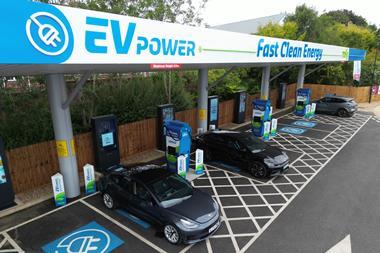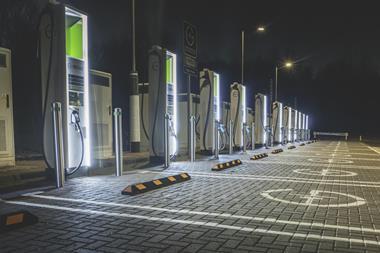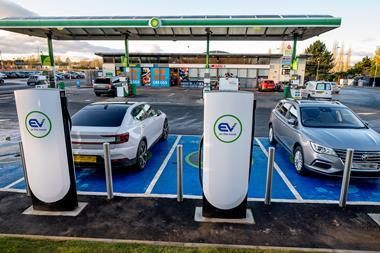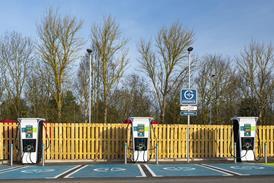


















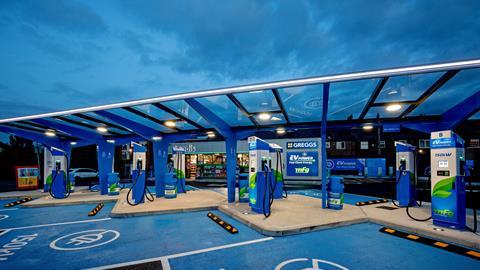
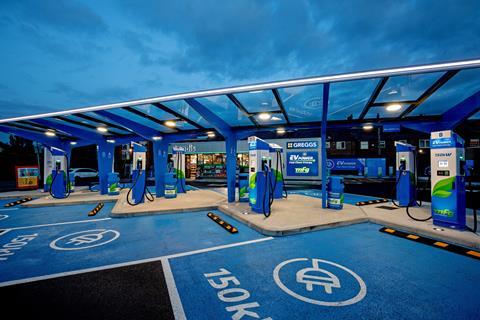
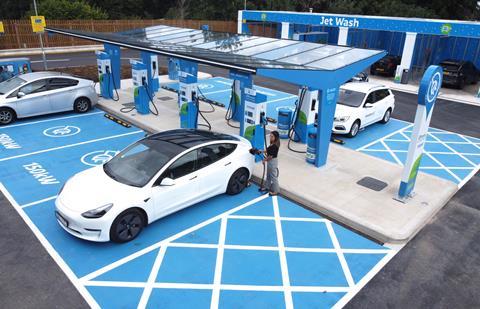
If there’s one Top 50 Indie that is really leading the way in EV charging, it’s MFG. Last month the company announced it had installed over 1,000 ultra-rapid EV charging bays throughout the UK. MFG says this is by far the highest roll-out of multi-bay, open ultra-rapid charging hubs in the roadside retail and supermarket sectors.
Martin Symes, EV director at MFG, says that currently over 230 sites on the MFG network have EV charging facilities and more than half of its sites will have EV charging by 2030. “The rest will follow quickly after, where power is available,” he explains.
MFG consistently does well in customer use surveys and last November was named second Best EV Charging Network in the large rapid/ultra-rapid category, with Tesla taking first place.
When asked why they score so highly, Symes says: “MFG is investing in top quality infrastructure which is reliable and easy to use, providing a consistent and dependable consumer experience. Along with the other on-site amenities such as valeting, food to go and convenience retail, our safe, secure, well-lit, often open and manned 24hr-locations provide a service unable to be matched by others.”
He adds that another factor in its success is that MFG always responds to customer comment and continually strives to improve the customer journey on its forecourts and be the ‘best-in-class’ in ultra-rapid charging.
Being reliable
Of course, any EV charging hub is only consistently voted ‘one of the best’ if those chargepoints are reliable. Symes says: “We have in-house automated monitoring systems in place and, in addition, our on-site staff and field teams support with daily checks and resets where required. We always want to maintain the best possible uptime and customer experience of our EV chargers.”
While most of MFG’s chargers are 150kW, Symes confirms that the company has deployed over 100 3-400kW chargers already across its network and will continue to roll these out at pace. “That said,” he explains, “Our 150kW chargers are still relevant infrastructure as they supply a single vehicle with dedicated power to that level, something most CPOs (chargepoint operators) still don’t do today. At most sites, we have procured and made available enough power to expand our developments further as EV adoption grows.”
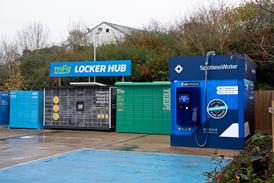
MFG is very mindful of giving EV charging customers things to do during their dwell time: “In addition to our strong convenience, food to go and valeting offer, we are continually adding options for customers to support any dwell time and we are creating minor destinations in the process, including things such as collection lockers and laundry facilities.”
Morrisons’ move
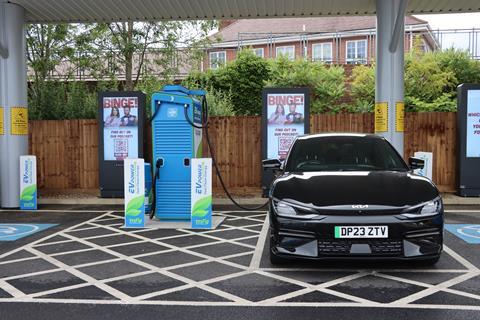
When it comes to the Morrisons part of MFG’s business, Symes says they are in the process of developing some 400 plots of land in Morrisons car parks, which were purchased by MFG as part of the Morrisons acquisition, in addition to the 337 forecourts. “Each one will have an ultra-rapid EV hub and, where space allows, a car wash centre too, 30 of which we expect to launch this year. In addition, 300 EV Power 50kW rapid chargers will also be installed in the Morrisons car parks, the majority of these will be completed by September 2025.”
A different story
While MFG is enjoying great success with its EV journey other, smaller operators have different tales to tell. We know it can be difficult – and extremely expensive – to get power to some locations but even if you have the power, sometimes you don’t get the footfall you need to make EV charging a profitable enterprise.
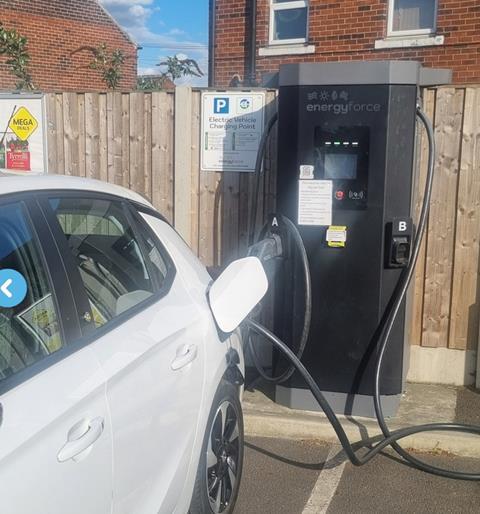
Forecourt Trader has written before about independent retailer Roger Perry, who has two forecourts in West Yorkshire. We charted how it took Perry 12 months to get planning permission for a charger at his Prospect Service Station in Ossett then even more time to get a charger installed. In all it has cost him around £100,000 to install EV charging, and unfortunately there is no happy ending to his story.
The EV charger is at Perry’s Ossett site and he says it is getting busier and attracting some regular customers. “It has brought some new faces to the site but the turnover is so low that in the overall scheme of things it is making no real difference. Most people just sit in their car while it charges, only a few actually venture out and spend money in the shop.”
Perry says the machine is much more reliable now than it was before and that’s because they stopped taking bank cards and just do charging via the mobile app. “We will be putting card payments back in shortly with a new provider and we will see what difference this makes. Previously it was the interface between the card machine and the charger that was the problem and this would take the charger off line “
“I made the decision to go ahead far too early in the roll out of EVs,” explains Perry. “I should also have done more research into the providers out there and looked harder at the running costs of the machine. It is the standing charge from the electricity supplier, which is the big issue here, currently £38.20 per day.
“I do not see that there is any chance of my initial investment being repaid and this will have to be written off. We have secured a better deal on electric starting in October with a £10 saving on the standing charge. This coupled with a gradual increase in usage should see the losses associated with running the machine reduce and if we can maintain the lower electricity costs and the same momentum in terms of usage, we should be profitable, at an operating level, in the next three-to-five years.
“This is not something I will be looking at doing at my other site and my advice to other small/medium-sized operators would be to steer well clear at the moment.”
Despite all this, Perry remains positive: “It is important to keep things in perspective. This decision did not work out however, most of my decisions have. This is a great industry to be a small part of, the pace and challenges within our industry are what makes it so interesting and rewarding to be in.”

EV solution
Baz Street, Be.EV’s head of business development, agrees that many independent forecourt operators remain cautious about EV charging but says there is a solution.
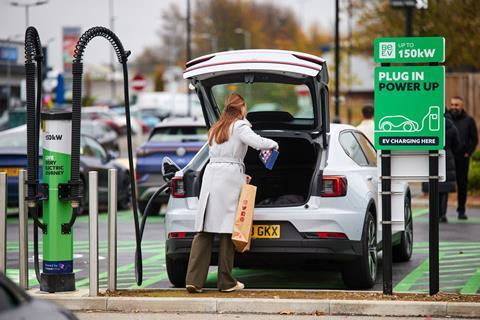
“In reality, installing EV chargers offers significant long-term benefits. First, many chargepoint operators – including Be.EV – fund the installation and maintenance of EV charging hubs, so independent forecourt operators don’t need to spend a penny to get them in the ground. Chargepoint operators also pay rent or share a split of the proceeds from charging, so it’s actually an extra revenue stream as well.
“Second, it’s clear EVs are here to stay. The number of EVs on the road has risen by 37-38% year-on-year from 2023 (Zapmap), and they’re very popular, with just 3% of EV drivers saying they would ever return to petrol or diesel (Zapmap). As EV adoption grows, fossil fuel sales will decline – and forecourts that adapt now will be future-proofed and better placed to thrive.”
Street believes EV charging offers a prime opportunity for forecourts to generate revenue while attracting new customers who stop to charge their vehicles. “With dwell times often stretching to 38.8 minutes on average, amenities like coffee shops, cafés and restaurants become powerful draws – turning waiting time into spending time.
“In addition, EV charging shows customers and partners that you’re aligned with the shift to cleaner, more sustainable travel – positioning your forecourt as part of the solution, not the past.”
When quizzed about some forecourts reporting that their chargers are hardly used, Street says: “This could be due to poor network connectivity or because chargers are placed in awkward or hard-to-reach locations. That’s why clear, visible signage is so important – it helps drivers quickly find where they can charge their EVs. Some forecourts are located away from main roads, which can make them less convenient for drivers looking to charge their EVs, particularly ones on longer journeys.
“That being said, some operators, like MFG, have very high utilisation rates on their sites, so for every bad experience there are plenty of experiences where EV chargers get used very regularly.”
Tipping point
Street says we’re approaching a tipping point for mass-market EV adoption, with forecasts suggesting there could be between 140 million and 380 million electric vehicles on the road by 2030. “Forecourts will need to start preparing now. The good news is, they don’t need to pay anything upfront, meaning that there’s no loss for them even as they wait for more drivers to transition to EVs in their area.”
Street says Be.EV specialises in ultra-rapid EV charging, with installations across a wide range of locations but with a focus on retail warehousing and roadside retail. This includes petrol filling stations with amenities for drivers, like toilets, shops and cafes.
“Our service is fully managed from start to finish. We take care of everything – design, financing, installation and long-term maintenance – so site owners don’t have to. We work closely with landowners and businesses to seamlessly integrate EV charging into existing forecourts, creating a reliable, user-friendly experience for drivers.
“For independent operators who may feel uncertain about the process, we’re hands-on every step of the way -– making the transition to EV charging as smooth and stress-free as possible.”

Tailored solution
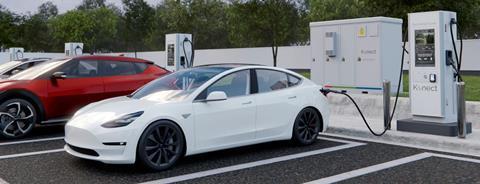
Gilbarco Veeder-Root’s, Konect is another company that can guide fuel retailers through the e-mobility adoption process by offering tailored solutions for site planning, funding, hardware, software services, installation, infrastructure management, support, service and maintenance.
Merrick Glass, managing director of Gilbarco Veeder-Root’s EV charging offering Konect, explains: “Ensuring a sufficient and reliable power supply is a critical step for installing high-power EV chargers and can present a number of logistical and technical challenges. At Konect, we simplify this process for forecourt operators. Once it’s confirmed that running power cables on your land is legally permissible, we collaborate closely with an Independent Connection Provider (ICP) to help secure the necessary grid connection.”
Glass says the ICP acts as the key liaison with local Distribution Network Operators (DNOs), managing any required grid infrastructure upgrades and coordinating peak load management to ensure your EV charging setup operates smoothly and efficiently. “This partnership removes the burden of complex network negotiations from forecourt operators,” he explains.
Beyond grid connection, Konect manages the entire EV charger installation process end-to-end; from initial site assessments and planning permission assistance, through to final installation and commissioning. “We help oversee every stage to deliver a seamless, hassle-free experience. This enables forecourts to confidently transition to providing state-of-the-art EV charging facilities without administrative or technical headaches.”
Glass concedes that installing EV charging infrastructure on petrol forecourts in the UK presents unique challenges but says Konect’s expertise and flexible solutions are designed to address them effectively.
“A key obstacle is the limited available space at many petrol stations. Installing multiple or high-power EV chargers without disrupting existing operations or customer flow requires careful planning. That’s why Konect offers a range of fast-charging options tailored to different site needs, from compact 30kW wall boxes to 200kW all-in-one chargers, and even 600kW distributed systems combining multiple chargers with centralised power units. This flexibility helps forecourts maximise charging capacity while maintaining smooth daily operations.”
Compliance is another critical factor. Says Glass: “Petrol stations must meet stringent UK safety standards, forecourt regulations and environmental requirements. Leveraging Gilbarco Veeder-Root’s years of forecourt management expertise, Konect ensures our charging ecosystem integrates seamlessly with existing station management systems, payment platforms and operational workflows. This alignment delivers a consistent and familiar user experience for customers transitioning from traditional fuel to EV charging.”
Securing a reliable and sufficient power supply, especially for high-power chargers, remains a challenge. Glass says Konect works closely with ICPs and DNOs to manage grid connections and infrastructure upgrades, simplifying what can otherwise be a complex process. It can also help retailers navigate planning requirements.
Preventing downtime
Downtime impacts both profitability and reputation for forecourt operators, and with increasing regulatory pressure – such as the UK’s recent 99% uptime mandate for DC fast chargers, backed by significant fines – reliability is now a critical business imperative.
Glass says what truly differentiates Konect is its fully integrated CPO-as-a-service solution. “While many individual services, hardware, software, field support, parts logistics and energy management can be sourced separately, Konect takes full responsibility of the entire ecosystem. This eliminates the common industry challenge of blame-shifting, enabling us to identify and resolve issues within hours rather than days or weeks – sometimes even months.”
As part of CPO-as-a-service, Konect offers a white-label EV charging app customisable with the forecourt’s logo and colour scheme. The app includes user-friendly features such as locating chargers, starting charging sessions in-app, making payments and tracking charging history. “This enables your business to become a visible and trusted e-Mobility Service Provider (eMSP), empowering you to engage directly with customers and promote your EV charging services in a way that truly reflects your brand’s identity,” explains Glass.
The company’s support network operates across multiple levels:
• Level 0: Automated software resolves up to 80% of issues without human intervention, often before anyone notices a problem.
• Level 1: A driver-facing help desk provides immediate remote troubleshooting and assistance to EV drivers.
• Level 2: A site host help desk supports petrol station operators and handles complex issues at its Network Operations Centre (NOC), which investigates root causes and coordinates resolutions.
• Level 3: Experienced field service technicians, coordinated by the NOC, perform timely on-site repairs to minimise downtime.
Glass says another important factor to consider is that Konect can draw on Gilbarco Veeder-Root’s expertise.
“By owning all aspects of the EV charging ecosystem, Konect delivers a seamless, retailer-branded charging experience that maximises uptime, protects your investment and drives ROI.”
Future-proof power supply
Securing a reliable, future-proof power supply is the foundation of any successful EV charging installation, and TSG UK says that’s where its Independent Connection Provider (ICP) services come into their own.
TSG marketing coordinator, Chery Ashton says that through its wholly-owned subsidiary, UCP Choice, TSG can deliver seamless, compliant and cost-effective grid connections for commercial and industrial clients across the UK. “As a fully accredited provider under the National Electricity Registration Scheme (NERS), we are authorised to carry out contestable works in coordination with Distribution Network Operators (DNOs), ensuring that forecourt owners can access the power they need, when and where they need it.”
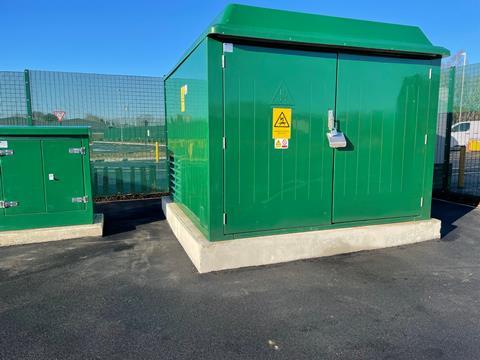
For some forecourt owners, the terminology around grid connections can be daunting. There are two main types of work involved: contestable and non-contestable. Contestable works, such as installing cables and substations, can be carried out by an accredited ICP like TSG. Non-contestable works, which may affect the wider network, must be completed by the DNO.
“By appointing an ICP to handle the contestable elements, forecourt owners gain greater flexibility, more competitive pricing and often a faster route to connection. However, it’s important to act early. With electricity demand rising across the UK, securing additional power capacity in advance, even if charger installation is not yet imminent, can prevent delays and avoid the risk of power unavailability later on.”
Ashton explains that one of the key advantages of working with an ICP like TSG UK is speed. “Unlike traditional routes that rely solely on the local DNO, TSG can carry out the contestable elements of the connection, such as cable laying, substation installation and civil works, independently. This often results in faster project delivery and reduced costs, without compromising on quality or safety.”
Ashton says installing EV chargers is not simply a matter of plugging into the nearest supply. “Many forecourts will require a significant upgrade to their existing electrical infrastructure to support the additional load. This is where TSG’s expertise becomes invaluable. From initial feasibility studies to final energisation, TSG manages the entire process in-house, offering a single point of contact and complete accountability throughout.
“Our qualified designers are involved from the outset, conducting detailed site assessments, load calculations and compliance checks. This early engagement helps identify potential risks, avoid delays and ensure that each connection is built not just for today’s needs, but for tomorrow’s growth.”
Wait and see
With so much activity and discussion around EVs and EV charging in the UK and across the world, you could easily write a book on the subject.
While many forecourt operators – and drivers – are still taking a ‘wait and see’ approach it seems EVs are slowly taking over and forecourts of the future will likely need to adopt a mixed fuel approach. However, there are still many hurdles to jump before that happens.
Sales figures of EVs, although growing, have not hit government targets which is why it has recently launched the Electric Car Grant. This gives consumers grants of up to £3,750 towards a new zero-emission EV priced at or under £37,000. Meanwhile, some of the big car manufacturers, such as VW and Skoda, are now offering discounts too. According to a recent YouGov survey, 17% of the public strongly support the grants while a further 32% ‘somewhat’ support it.
Meanwhile, another survey – from Persuasion UK and IPPR – has revealed that half of all drivers now know someone who owns an EV, or own one themselves, and 55% feel positive about them. The research found that those who are not positive about EVs were worried about their cost and convenience.
Finally, the latest Road to 2030 Report from Auto Trader found that the vast majority of UK drivers don’t believe the government will stick to its plan to ban new petrol and diesel vehicle sales from 2030. We’ll just have to wait and see about that.