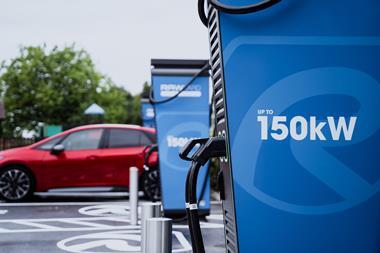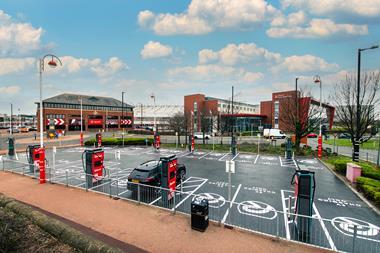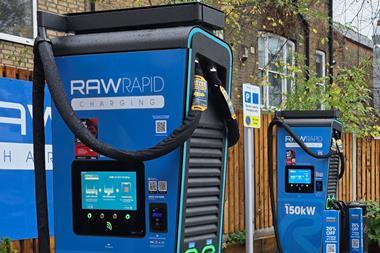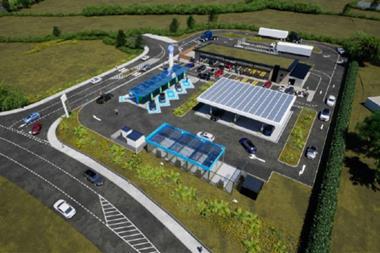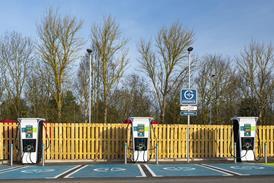












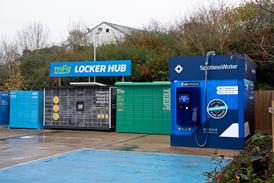







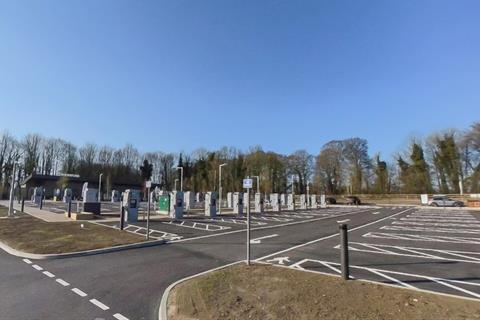
New data shows the number of EV charging hubs – standalone locations featuring eight or more bays – grew significantly in the first half of 2026, but not a single chargepoint provider that focuses on hubs has so far reported a profit.
There are now 13,711 EV chargers available at 1,034 UK hubs, with the 108 new locations that came on stream in H1 2026 representing a 15.2% growth, compared to 10% for the chargepoint sector as a whole, which now comprises 121,171 chargers at 46,731 locations, according to Zapmap.
But while companies continue to build large hub facilities, questions remain over how many people will eventually use them, and if the companies that build and operate them will ever turn a profit.
Key to this issue is the fact that roughly two thirds of UK households have off-street parking, which brings with it the ability to charge at home where electricity can be as little as 7p per kW hour, less than 10% of what most public hubs charge.
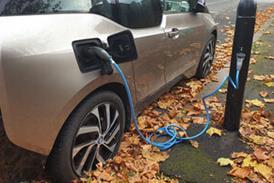
The government, meanwhile, is prioritising kerbside charging for the roughly one third of households that lack driveways. These devices grew in number by 18% in H1, with 39,859 on-street sockets now available according to Zapmap.
On-street chargers are typically used by nearby residents for overnight or long-stay charging sessions, delivering electricity more slowly, but also at a lower cost than hubs. Kerbside devices are also significantly easier and cheaper to install than dedicated hubs, which cost many millions and take many months to build, require more complex and scarcer high-power grid connections, and bring with them lengthy, expensive and at times fruitless planning permissions.
Given the average car journey is just eight miles according to Department for Transport figures, hub providers could be chasing a tiny customer base that is predominantly made up of drivers ‘caught short’ between cheaper charging options on long journeys – even if all cars eventually become electric.
Chargepoint provider bosses remain bullish, insisting that profits are just around the corner, while cash keeps flowing into the firms for now, often from finance firms with environmental targets and aspirations that play a significant role in deciding where to invest.
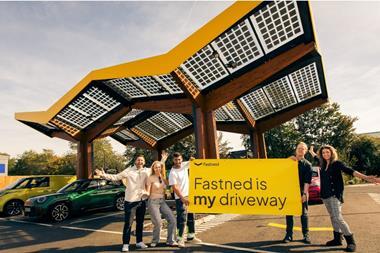
As of now, however, hub-operators’ bottom lines tell similar stories: Gridserve lost £82m in its most recent company accounts, Fastned lost £6.2m, Osprey £6.1m, and Instavolt £8.5m, while Instavolt’s parent company, which operates across the UK plus Ireland, Iceland, Spain and Portugal, posted a loss of £101m and a consolidated deficit of £249m in FY 2024/25.
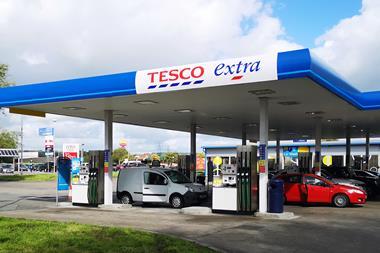
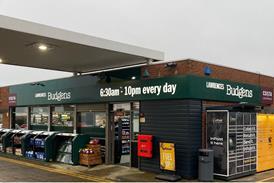
Even firms that offer charging hubs at forecourts appear to be struggling. Chargemaster UK, the trading name for BP Pulse, lost £66.4m in FY2024, the most recent year for which results are available. And MFG, which in 2021 earmarked £400m for EV charging, recently announced a summer-long 25% price cut for electricity at its 2,000 charging bays by 25%, indicating existing EV customers require chasing.
Anecdotally, the boss of one major chargepoint operator was until recently known to be operating under the impression that 2035 will see not only sales of new cars with internal combustion engines banned, but all 30m+ existing petrol and diesel cars removed from the road – a misapprehension that would incorrectly imply a vast number of new customers will emerge within the decade, and an error that presumably had some role to play in that firm’s corporate outlook.