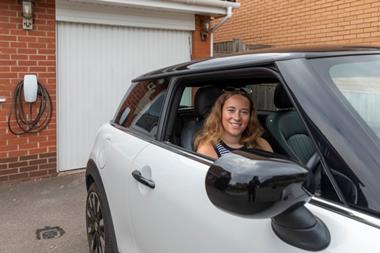





















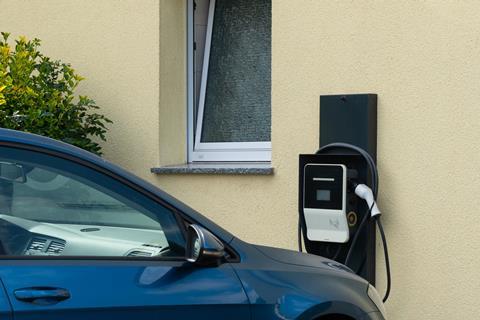
A study commissioned by the Department for Transport has found that the proportion of EV drivers with the ability to charge at home is far higher than previously thought, with nine out of 10 electric car owners able to recharge on their driveways and in their garages.
The DfT’s report, which looked at a nationally representative sample of over 1,000 drivers, found that 91% of those with an EV and 88% with a plug-in hybrid (PHEV) can charge at home. Three quarters (76%) of pure-electric drivers have a dedicated home ‘wallbox’ charger, a figure that fell to 53% for PHEV owners.
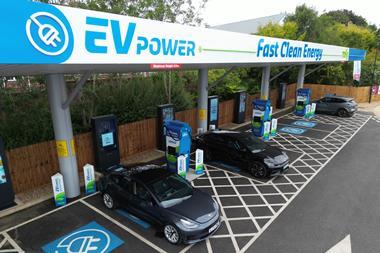
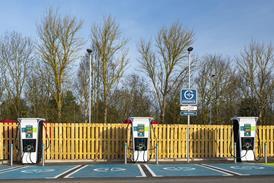
The researchers also determined that half (51%) of EV drivers make long-distance journeys only once a month or less, and that motorway and A-road chargers are used “less often” than dedicated hubs and workplace chargers. This indicates that the customer base for EV chargepoints at forecourts may currently be far smaller than was previously thought.
The research, which was carried out by Ipsos over a 12-month period, was commissioned to help shape government policy around EVs. It saw drivers keep a diary of their driving and charging habits, and found that just 28% of EV drivers cover long distance journeys once a week.
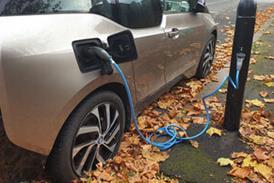
Access to home charging was highest in the Midlands and in rural areas, where 97% and 98% of drivers respectively reported having this facility, compared to 86% for those in the South of England, and 89% for drivers living in urban areas. Some 54% of those studied said their electric car was a secondary vehicle.
EV drivers typically charge up once or twice a week, with 49% having a bespoke EV-focussed electricity tariff allowing for cheaper recharges, and 74% having a smart charger, allowing for sessions to be controlled from their smartphone.
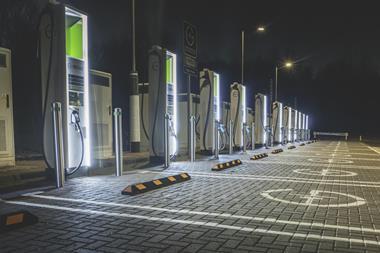
The study is said to be “representative of the total EV driver population in the UK”, which currently comprises 1.6 million pure EVs. It found that 32% of EV drivers use dedicated public charging hubs at least once a week, while workplace charging was used by 27% of drivers over the same timeframe.
The study also found that 40% of drivers acquired their car via workplace salary sacrifice schemes, a figure that rose to 57% among those aged 17-34.
The most comprehensive research on access to off-street parking was published by the RAC Foundation in 2020. This found that an average of 65.1% of UK homes (68% outside London) have off-street parking, though that figure ranged from just 7% in Westminster, to 84% in Flintshire, Wales.