





















We’ve all seen the videos of people in shops, sweeping products off shelves into holdalls and black bags then leaving the premises without paying. Indeed, some of you – unfortunately – will have seen this happen in your own stores.
There is a growing consensus that the police are not interested in these crimes, however, one police officer Forecourt Trader spoke to says that’s definitely not the case.
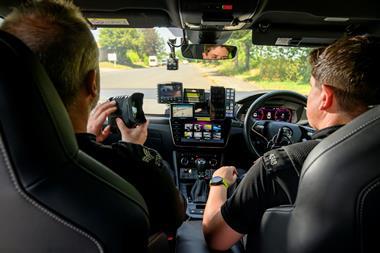
Trainee inspector Oli Tattersley, who specialises in anti-social behaviour, prevention and problem solving at Lancashire Police, says he’s sorry some people feel that way but he is definitely bothered about shoplifting and that’s why the county’s Operation Vulture was set up.
Operation Vulture is Lancashire Constabulary’s response to shoplifting across the county. According to the police website, “The operation will see dedicated officers undertaking hotspot patrolling, increasing their visibility in targeted areas and creating strong partnerships with retailers across the county to better share intelligence, get a deeper understanding of retail crime and identify more offenders.”
Operation Vulture first came to Forecourt Trader’s attention when we covered a story about a prolific thief who was handed a three-year CBO (criminal banning order) or shoplifting, including stealing from three forecourts (two Kay Group sites and one EG On The Move site), all in Burnley. The perpetrator, Robert Simpson, was apprehended as part of Operation Vulture.
A CBO is a court order that excludes someone from a specific place and if they enter that place once the CBO is live, they can be arrested. It can only be handed down to someone who has previously committed a crime.
When Forecourt Trader spoke to the Kay Group about the case, they had not been informed about the CBO and were going to look into it but they did confirm that the police were expecting them to hand out their own banning letters before they took any further action.
Responding to this comment, Tattersley says banning letters are a good idea as they could be used as evidence in future endeavours to get CBOs. “A CBO isn’t something that is easy to get. We have to show repeated behaviours from the defendant. And if someone ignores a banning letter, is still visiting a shop, that is good evidence for our CBO.”
Meanwhile, at EG On The Move, Justin Watkins, safety and compliance manager, says they don’t comment on individual cases but adds: “We do work closely with local authorities and the police to support action where necessary, including banning individuals when appropriate. We value our relationship with local police forces and appreciate their support in responding to serious incidents and enforcing legal action where it is needed.
“Across our network, we use a range of security measures to deter theft and protect colleagues, including investment in CCTV, ANPR cameras to monitor vehicle movements, staff training and HR support to help overcome any stress or anxiety following an incident, and clear in-store protocols, for example, staff walking the store during busy times, panic buttons under counters connected to emergency services and shutters coming down. These measures are continually reviewed, and we are seeing positive results.”
He says the safety and wellbeing of staff and customers is always EG’s top priority, and they have a zero-tolerance approach to crime and anti-social behaviour on their sites. He adds that store colleagues are trained to report incidents and are supported throughout. “We are proud of their professionalism, and we remain committed to creating a safe working environment for them.”

Good success rate
Back to Operation Vulture, which went live in September 2024. From July 1 this year, to date, there have been 67 CBOs for theft since, says Tattersley, and there are plenty more in progress. He adds that CBOs are a good idea but concedes that they can just move thieves to other areas but the police will react to that. As for a CBO’s effectiveness, he says they have a good success rate.
With CBOs, often shop staff recognise someone who has been banned from their premises and reports it or officers on patrol spot someone where they shouldn’t be or the subject of a CBO is spotted on CCTV. In these cases, the criminal can be arrested for shoplifting and for breaching their CBO and go back to the courts.
Meanwhile, before they get anywhere near a CBO, Tattersley says that once Lancashire Police have initially identified someone as a repeat offender, they take a closer look at them – asking why they are stealing in the first place, is drink or are drugs involved and can any help be given to them.
“If we can take away that pinch point of why they’re shoplifting, then that’s our focus. But some people don’t want help. They are career criminals and with people like that we will proactively target them as robustly as we can.”
Tattersley admits that retailers will not always see a police response to a shoplifting incident and this can be for a number of reasons.
“For example, it’s theft of meat from a petrol station but the offender is not there. However, a mile down the road, we’re dealing with a murder, and two miles down the road we’re dealing with a car crash. We obviously have to deal with incidents on a threat, harm and risk basis and the fact that the offender has left obviously reduces the risk. That’s not to say that we’re not going to go and investigate it. We have other processes in place, when the offender has left. We have a team of officers at headquarters that will start off the crime report. And they will then allocate it to the local neighborhood policing team, and that team will then continue that investigation. So, the retailer may not get a response straight away. But there is this process working in the background to make sure that we’re not just going to forget about.”

Gold standard for CCTV
Another common criticism of the police is that they are given CCTV evidence of someone stealing from a store, but no action is taken.
Tattersley says: “When an offence is reported, obviously we’re duty bound to make sure that we review all reasonable lines of inquiry. The gold standard for CCTV for a good prosecution is it showing the defendant enter the store, pick up and conceal the items and then leave the store. That is the gold standard. Obviously, there are different levels of CCTV, when someone is just concealing something it makes the investigation a little bit more complex. We need to show that they dishonestly appropriated that property. That they passed all points of payment without making any attempt to purchase it.”
Although CCTV has got much better in recent years in terms of quality, Tattersley says they still have big issues where the date and time of incident are wrong, so it’s important that retailers make sure their CCTV system is displaying the write date and time. Other problems with CCTV include cameras being pitched at the wrong angle so they don’t show faces clearly enough. “With regards to come of the CCTV I have seen, I wouldn’t be able to recognise my own mum if she was in it,” says Tattersley.
Crime and Policing Bill
Sticking with the law and the Crime and Policing Bill completed its Second Reading in the House of Lords last week and will now go to the Committee Stage. In response, Lucy Whing, crime policy adviser at the British Retail Consortium, says: “We are glad to be one step closer to the implementation of the Crime and Policing Bill. As the government takes action to address retail crime, retailers hope this Bill will play a vital role in protecting retail workers from harm and tackling the surge in theft.
“The Bill will remove the £200 threshold for ‘low level’ theft, which will send a clear signal that all shoplifting is unacceptable and will not be tolerated. It will also introduce a standalone offence for assaulting a retail worker, which will increase sentencing and improve the visibility of violence against retail workers so that police can allocate the necessary resources to tackle this challenge.
“However, the Bill must go further. All people working in customer facing roles in the industry deserve equal protection, as is the case in Scotland. It remains unclear if the offence will cover delivery drivers, despite new figures from Usdaw revealing that more than three quarters have been a victim of abuse and over one in 10 have been assaulted during the last 12 months. We call on the government to ensure that the final Act ensures the extension of protections to delivery drivers.”

From the shopfloor
Back to the coal face and Sharon Bailey who runs Maxol’s Edenderry Filling Station in Belfast on a CODO (company owned, dealer operated) basis, says shoplifting just gets worse and worse. Hers is a harrowing tale but one that is repeated up and down the land.
“Shoplifting happens multiple times a day, every day. From pensioners to adults and children, it doesn’t matter what age they are, they are all doing it,” she says.
“We get men and women targeting chiller fridges, they come in with bags, sweep all the items in the bags and run, emptying our meat fridges. Deli food is stolen on a daily basis, they take the food then go down a different aisle and out the front door. The same with the Barista coffees; they fill up and walk out. And people fill up shopping baskets and run out the door, which means we are losing expensive baskets as well as products.”
Bailey says the main targets for these thieves are high-price items such as large jars of coffee, steaks, all meat products, washing products such as wash pods and large fries (breakfasts) from the deli.
“We aim to have one staff member walking around the store, but this is not always possible because ours is a busy store and the staff member is needed on the till to serve customers.
“Staff have been told to look out for suspicious activity and body language but not to confront the person/persons as most are on drugs and could be dangerous. Staff have been verbally abused and even threatened with scissors. The thieves actively encourage the staff to hit them because then they can put in a claim against us!
“We have security barriers and high-priced items are stickered but the thieves just run out and are away before anyone can chase them.
“Reporting to the PSNI (Police Service Northern Ireland) is very time consuming, they come out, take statements, view CCTV footage but we never hear if anything actually happens, we never get the money back for stolen items so it’s a continuous loss to the business.
“We did take two people to court but they just got handed suspended sentences with no repayment to the business.
“We are very limited in the steps we can take to ease this situation, due to rising business and staff costs we cannot afford a security guard or extra staff to patrol the shop floor.”
Bailey says the consistent theft is having a big impact: “The loss to the business financially is affecting both our mental and physical wellbeing, experiencing financial loss on a daily basis causes us to worry about the future of the business, our future as managers and our staff’s job security.”.

Preventative measures
There are all sorts of preventative measures retailers can take to try and prevent shop theft. One that Top 50 Indie number one MFG is using successfully is the Chirp Protect Edge system. The system sees retailers attach tamper-proof electronic tags to high value items and in its trial in two stores, MFG has reported that theft is down by 60%.
As for Chirp Protect’s effectiveness generally, Anthony Golden, sales manager at the company, says: “We don’t publish a single universal deterrence percentage because outcomes vary by store layout, product mix, staffing levels and local crime patterns. What we can say is that when Chirp Protect is deployed as part of a wider loss-prevention programme – tagging high-risk lines, clear staff procedures and CCTV review – retailers report measurable reductions in shrinkage.”
He mentions the MFG results but says other real-world results include forecourt operator Pricewatch cutting shrinkage on highly targeted items by 90% at its Eastbourne service station after fitting Chirp Protect, and another convenience store manager reports that persistent summer shoplifters moved on to another store 10 miles away after Chirp was installed. Yet another retailer reported theft of baby formula reduced to zero on protected lines. “These outcomes show Chirp frequently deters opportunists and disrupts organised theft patterns,” says Golden.
Installation cost depends on the solution chosen, the number of tags required and store size. “No two sites are identical,” says Golden, “So we produce tailored quotes after assessing requirements. As a guide, a forecourt of around 1,000sq ft typically costs about £2,000 to equip, while a 3,000sq ft store might be up to £4,000. There are no ongoing maintenance or subscription fees for the hardware, and we offer a three-year lease option with no upfront cost where monthly payments typically range from about £71 to £161 depending on the package.”
He says the hardware is simple to install and tags are straightforward to apply at product level; Chirp can integrate with existing CCTV systems. ‘We provide on-site or remote training to get staff comfortable with tagging and deactivation.”
Golden explains that where to place the tags should be risk-and-return led, not a fixed list. “Many retailers find roughly 80% of losses come from about 20% of SKUs, so focus on lines that combine high theft frequency, high value for size, high margin or ease of concealment. Typical forecourt examples are baby formula, alcohol, meat, cheese and motor oil.”

Tamper resistant
We’ve all seen examples where thieves are able to navigate their way around tags but Golden says Chirp tags are not easy to remove.
“Chirp Protect tags are tamper-resistant, cannot be bypassed by magnets, and include multiple triggering mechanisms –our wrap tag is the only five-way alarm tag on the market – so attempts to remove or defeat them trigger alerts. Determined thieves may attempt improvised methods, which is why tagging is most effective when combined with CCTV, trained staff and focused procedures: the combination raises the complexity and risk for the thief and reduces shrinkage. For legitimate purchases, removing a Chirp Protect tag at the till is straightforward using our digital deactivator; the system is designed to be quick and safe for staff to use.”
Staff safety is obviously the priority in any cases of shop theft Golden advises that staff follow the store’s incident protocol: note the time and direction of exit, preserve CCTV clips, record descriptions and any vehicle details, and save till and transaction records.
“Chirp Protect time stamps attempted thefts when synced with CCTV to simplify reporting and evidence capture. Our tags include a built-in alarm (around 90 dB) so they continue to sound even after the thief has left the premises; that audible alarm often helps recover stolen property or deters offenders outside the store.
“We also provide warning stickers and entrance stickers to signal protected lines; in many cases this moves criminals on to easier targets, which demonstrates the system’s effectiveness at protecting the stores that are using it. If a store chooses to intervene, they should follow their written procedures; with alarming tags there is less risk of wrongful accusation because the alarm provides clear evidence of tampering.”