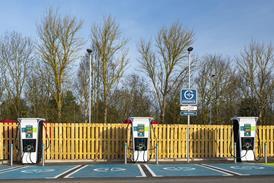

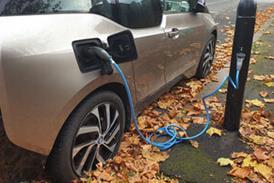











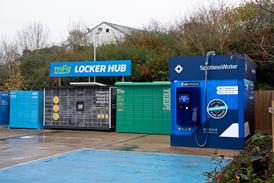









The push for electrification continues apace in Whitehall, as the Department for Transport announced a loosening of the planning processes required for EV chargepoint installations.
The DfT confirmed that as of May 29, 2025, “more drivers and businesses will no longer need to submit a planning application to install public or private EV sockets”.
The change follows alterations being made to The Town and Country Planning Act 1990 by way of a Statutory Instrument (SI), a parliamentary device commonly used to update and add detail to existing laws.
The SI in question, 2025/560, relates to a number of changes to planning laws for EV chargepoints.
- Previously, electrical upstands (legal parlance for freestanding EV chargers), could not be installed without planning permission if they were to be located within two metres of a road. The SI removes this limitation, classifying such installations as ‘permitted developments’ that do not require planning consent.
- Similarly, planning permission used to be required if a wall-mounted chargepoint, for instance in a car park, were to face onto and be installed within two metres of a road; that limitation has also been removed.
- Freestanding chargers could also not be higher than 1.6 metres if they were within the boundary of a house or block of flats, with a 2.3-metre limit in all other areas. The SI leaves the 1.6m domestic height limit unchanged, but increases the maximum height for other chargepoints to 2.7 metres.
- Finally, electrical substations needed for high-power public EV chargers (“equipment and a unit of equipment housing to support the operation of electrical upstands”) will be exempt from the need for planning permission, assuming a) they are installed on an area “lawfully used for off-street parking”, b) that only one unit will be installed, c) that the unit will measure no more than 29 cubic metres and be no higher than 3m, d) that it is not within 5m of a road or within 10m of the boundary of a residential development, and e) that it is not on the land of a listed building or scheduled monument.
Announcing the changes, the DfT’s Lilian Greenwood said the government is “cutting down on paperwork to power up the EV revolution so that drivers, businesses and those looking to make the switch will have more chargepoints to power from and less red tape to deal with”.
These changes are separate from the forthcoming Planning and Infrastructure Bill, a new piece of legislation still making its way through parliament. Among other changes, the P&I Bill will make street works licences easier and cheaper to obtain.
That Bill will also enshrine in law a “first ready, first connected” policy for grid connections, speeding up EV chargepoints being connected to the electricity network by removing delayed ‘zombie’ projects from queues, which can span several years depending on a site’s location.