

















British oil major Shell claims to have developed a new battery charging technology that will allow EVs to charge from 10% to 80% in just 10 minutes.
The firm says its EV-Plus Thermal Fluid fills gaps between cells in the batteries of electric cars when they’re charging to cool the system, dispersing the high levels of heat that go hand-in-hand with ultra-rapid charging.
Shell has worked with UK motorsports and engineering company RML Group to develop the fluid, which uses proprietary gas-to-liquid technology to “significantly” reduce thermal stress on the battery, “allowing much higher cell charging currents to be tolerated”.
Rather than being a standalone product, the fluid has been developed to showcase new, compact battery designs used for small, efficient EVs – which is where much automotive development is currently focussed.
If the system is used in a “carefully designed lightweight and aerodynamic car” capable of covering 6.2 miles per kiloWatt hour (an efficient modern EV can manage 5 miles per kWh), Shell says 15 miles of range can be added per minute of charging.
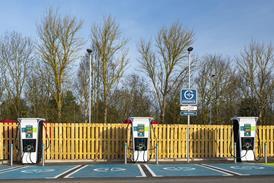
A 34kWh battery pack using EV-Plus Thermal Fluid is said by Shell to be able to recharge from 10% to 80% in “under 10 minutes”. Working on the assumption the time in question is eight minutes, and 70% of a 34kWh battery is 23.8kWh, this indicates a charging speed of 178.5kW. This slightly only slightly faster than standard 150kW ultra-rapid recharging, and some way shy of the 320kW sophisticated EVs like the Audi e-tron GT can receive – infrastructure depending.
While Shell has not gone into specifics, however, the new cooling technology may allow for ultra-rapid charging times to be achieved more consistently than is often the case, as vehicles frequently throttle back actual charging speeds compared to those claimed unless the vehicle, charger, and ambient conditions are Goldilocks-perfect. The technology’s advanced cooling properties also prevent battery degradation, which is associated with frequent ultra-rapid recharging sessions.
Shell’s lead engineer on the project, Robert Mainwaring, commented: “By embracing advanced thermal management solutions, we believe this will open the door to a new generation of more sustainable, efficient and cost-effective battery electric vehicle solutions.”