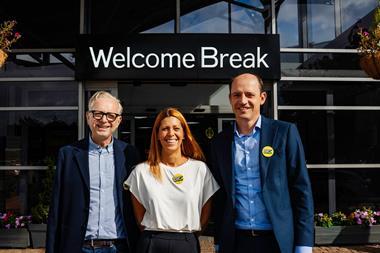












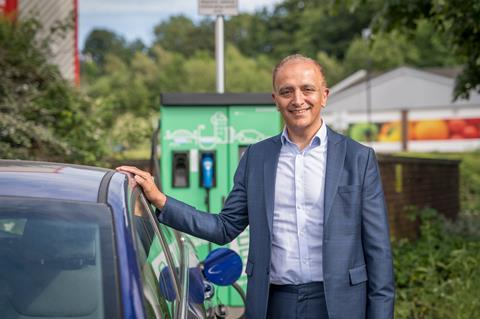
Forecourt Trader recently published an opinion column responding to claims from chargepoint firm Be.EV that it is time to “call in the undertakers” for petrol stations. After reading that op-ed, Be.EV’s chief executive, Asif Ghafoor, asked if we’d like to interview him.
Ghafoor is friendly, direct and honest. He is also resolute in his belief that the forecourt sector ultimately has a best-before date.
“The need for petrol stations, for diesel stations, is going to reduce, to ultimately end – that is happening”, he says.
But while that might sound dogmatic - combative, even - this is far from a comprehensive reflection of Ghafoor’s position.
Ghafoor recognises everyone in the industry is ultimately making predictions, and that there is uncertainty in the automotive sector as it stands. “If you look at the current market in terms of what’s happening around us, we’re in a transition”. He nonetheless believes, though, that the future is electric.
Pointing out that one in four new cars sold last month was battery-powered, he says: “The direction of travel is very much towards the end game of removing carbon-emission vehicles from the road.”
Evolving EV drivers
This perspective partly stems from government mandates phasing out the production of new cars with combustion engines, but it is also informed by Ghafoor’s experience on the ground. The typical electric car driver is no longer an enthusiastic early adopter, he says: general motorists are now just as likely to need to plug in.
“I spend a lot of time in car parks talking to customers to understand why they made the change and what persuaded them”, he explains.
“We’re beginning to enter the mass-market period. Some customers once spent a huge amount of time talking to you, but now they’ll shut the door and fiddle on their phone; they’re not the keenies any more.”
We highlight some of the issues with electric cars: the disadvantages they place upon people who don’t have driveways; the time public charging requires those people to give up; the fact the Salary Sacrifice schemes behind many EV registrations are associated with better-paid jobs.
Ghafoor responds by pointing out that the NHS, which employs people at all strata, runs the UK’s largest Salary Sacrifice scheme, while, more broadly, he believes perspectives on EV ownership are changing fast.
“This market is moving, and I think the world has been moving a lot faster in the last 10 years than it did in the last 50 years.”
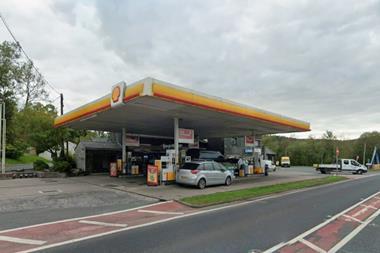
Petrol stations: not dead yet
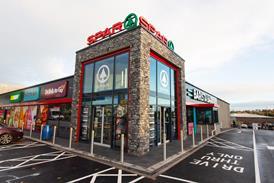
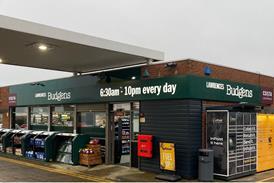
When Ghafoor predicted of the death of the petrol station, he did so in spades, referring to undertakers and commissioning images of gravestones. Does he stand by that now?
“We don’t get out of bed in the morning thinking how we can upset another sector. That’s never the intention. The intention was to demonstrate what we’ve experienced.”
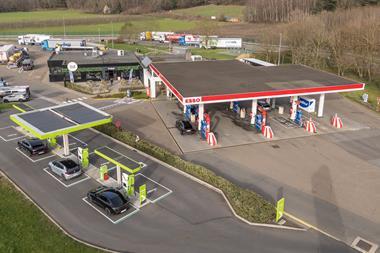
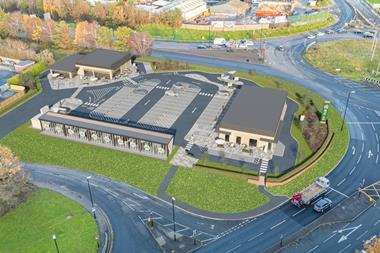
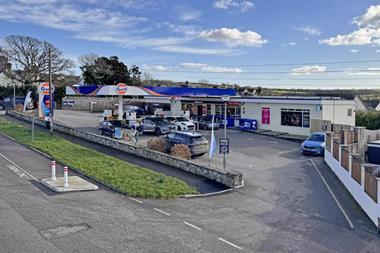
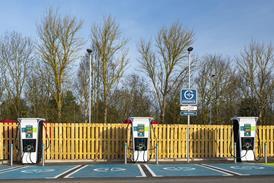
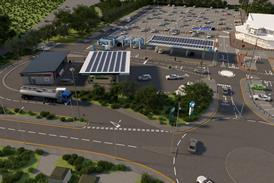
That experience specifically relates to Be.EV’s Manchester Charging Oasis, a newly opened ultra-rapid hub which sits on land that was once home to a petrol station.
The defunct forecourt’s leaking underground tanks were removed as part of the site’s regeneration, which goes some way to explaining Ghafoor’s take on the sector. But while there isn’t time for us to properly explore comparable EV issues, such as the intense water usage that surrounds lithium processing, we press on whether the ‘death’ messaging struck the right note.
The demise of fuel retailing would, after all, bring significant job losses, and the forecourt sector offers valuable entry-level roles, including to those looking to take their first step on the UK’s employment ladder.
“I’m the son of the people you’re describing there”, he says. “My parents came over to the UK in the 1960s with little more than £5 in their pocket and set up their own business.
“We set up in retail; my dad set up clothes shops. Unfortunately, the nature of fashion and high streets and retail, the type of businesses he was running no longer exist.”
Ghafoor also points out that the chargepoint sector offers roles to people at many different professional stages.
“We’ve got all levels of skills coming into this space, from basic electricians working on site and learning the trade or going through the apprenticeships coming out of college. A big focus is on data and data analytics, and new skills coming through which in my day, we wouldn’t have even been learned about in school.
“This was never an attempt to knock petrol stations, to say ‘this isn’t a business anymore’”, he continues. “There’s a business there today; there are a lot of vehicles out there still requiring petrol stations.”
He adds, though, that while he is “glad the petrol sector is having a resurgence”, he is convinced that “the evolution of this ultimately will lead to the change I described – that my parents went through.”
Predicting the future
When pressed on the challenges his sector is facing, such as the fact retail buyers choose anything other than electric in 90% of purchases, and that as government mandates have changed at least six times since being announced a decade ago, more changes are entirely possible, Ghafoor is unwavering.
He highlights issues around carbon emissions, the impact exhaust fumes have on our health, and again asserts his belief that change is only going in one direction. Yet there also comes an acknowledgement, an admission, even, that we’re dealing with things pertaining to the future, which by its nature cannot be known.
“Honestly? I don’t think either one of us is right, I’ll be very open with you here. If we could predict the future on this, either I’d be opening loads of petrol stations, or you’d be investing in EV charging.”
This candour is bolstered by another positive aspect of our conversation: a shared belief that despite coming at this topic from entirely different positions, constructive, friendly dialogue is vital.
“I quite liked your article and the reply back”, he says. “It’s a different perspective. I don’t agree with it, but I also don’t object to it, because I don’t think we should try to dictate one thing or the other. What is required in this world is healthy discussion.”