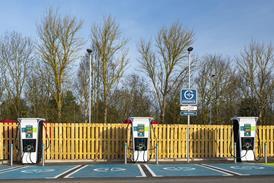














The majority of EV drivers rarely use public chargers even when undertaking long journeys, new research has found.
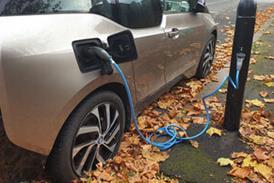
A You Gov survey commissioned by chargepoint operator Osprey and home wallbox firm Easee polled 2,086 EV drivers and found that 74.6% of motorists with home charging facilities only use public plugs “once every few months or less”.
The survey also found that 30.6% of electric-car owners use public plugs even less frequently, defined as “rarely” by the research. Previous work commissioned by the Department for Transport discovered that 64% of drivers use main-road charging stations twice a year or less, and that 91% of EV owners can charge at home.
Such statistics are likely to cause chargepoint operators sleepless nights, not least as some firms are said to be “running out of money”, and several are losing many millions of pounds a year.
Much of the reason for drivers’ reluctance to use public facilities is likely to come down to cost. Home electricity is currently capped at 26.11p per kiloWatt hour and off-peak smart tariffs can bring this down to just 7p, but public sockets are far more expensive. Osprey charges 87p per kWh, for example, with a 5p per kWh discount for customers who use its app.
As well as having to claw back sky-high installation costs, and operating overheads, chargepoint firms are not done any favours by the government, which is fighting to keep VAT at 20% for the commercial electricity public chargers dispense, despite recently cutting the tax to 0% for domestic power.
Ministers are also said to favour slower, cheaper on-street chargers intended for those who lack driveways to charge overnight, rather than faster, more expensive dedicated hubs designed for charging on the road.
Sam Levy, regional sales director for the UK and Ireland at Easee, comments: “It is striking that a quarter of EV drivers are not yet regularly using rapid chargers when doing longer journeys, while those with home chargers tend to use the public network only occasionally.”
Levy adds: “Home charging is at the heart of the EV ownership experience for many drivers. But when it comes to longer journeys and summer road trips, public rapid charging has an equally important role to play, especially with the network growing more and more.
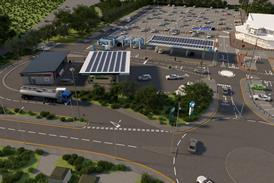
Dora Clarke, head of marketing & communications at Osprey, says her firm’s “nationwide rapid and ultra-rapid charging network is simple to use with the tap of a bank card, and conveniently built near coffee stops, retail parks, pubs and on major routes including those in rural areas”.